Clinical Trial Finder - ALS Patient Matching Platform

Overview
The Clinical Trial Tools project focused on redesigning a suite of website tools that help people living with ALS and their caregivers discover and understand clinical trials. Through a guided, accessible interface, users can learn essential terminology, explore more than 800 global trials, and curate a personalized, shareable list to support informed medical decisions.
As the lead and sole UX/UI designer, I partnered with a national ALS organization to create an intuitive system that reduces barriers to trial enrollment and improves the quality of life for people navigating serious health decisions.
User Interface
Responsive Website
User Experience
Cross-functional Team Collaboration
The Challenge
Finding a clinical trial can be overwhelming, especially for individuals newly diagnosed with ALS, caregivers with limited time, or users unfamiliar with clinical terminology.
The project needed to address several key challenges:
Empower users to make informed decisions about their care through clear, approachable information
Connect diverse user types (patients, caregivers, clinicians) with trials that fit their unique medical profile
Design multiple tools (search, maps, guided questionnaire, saved results) that all work together seamlessly
Reduce cognitive load in a context where users may experience fatigue, stress, or limited mobility
Present complex medical information in a trustworthy, modern, and accessible interface
My Role
I served as the sole and lead UX/UI designer, responsible for:
Leading end-to-end UX and UI design across the entire suite of clinical trial tools
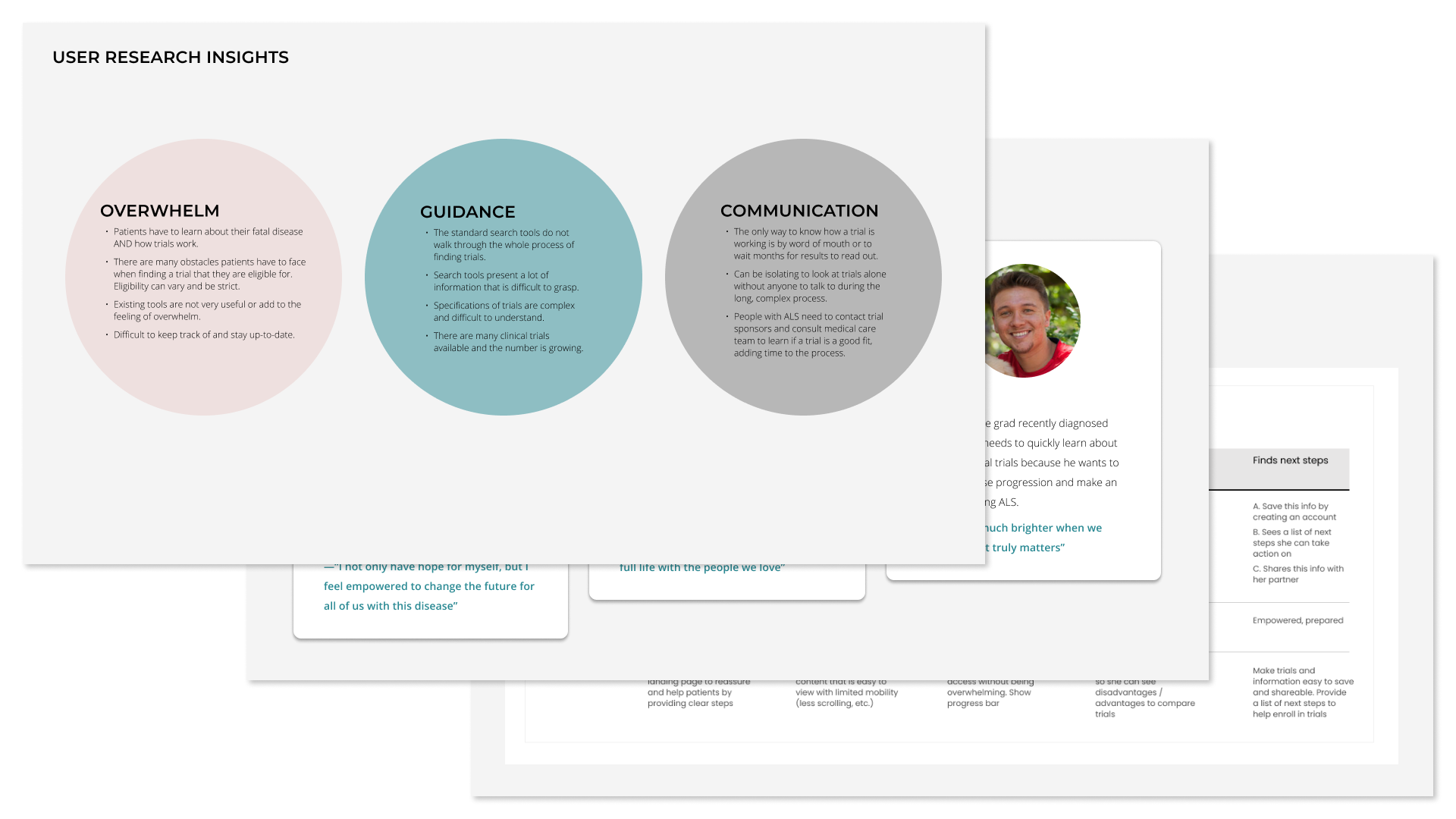
Facilitating user research, including interviews and feedback sessions with people living with ALS
Collaborating closely with industry experts, marketing teams, and developers to align clinical accuracy with usability
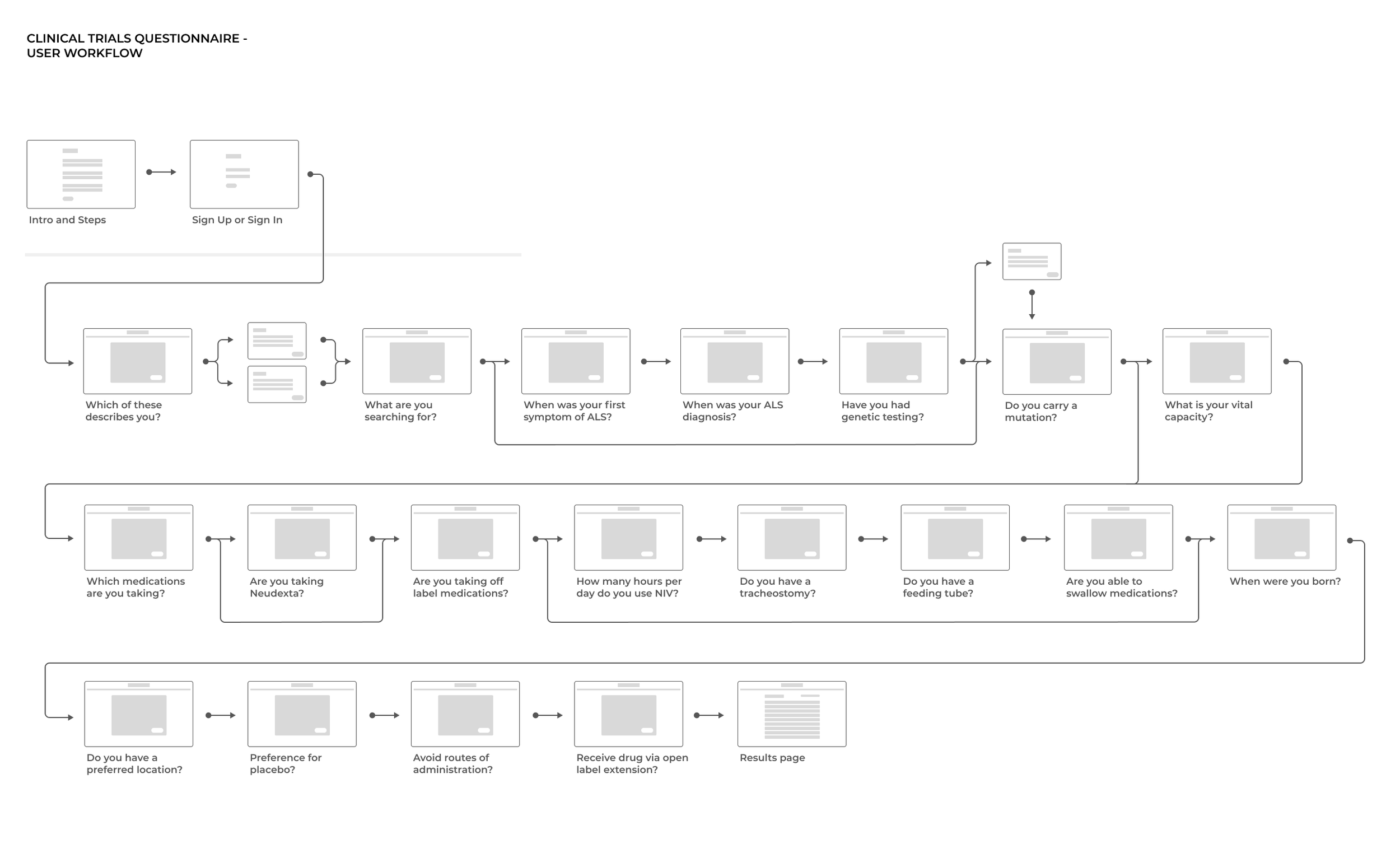
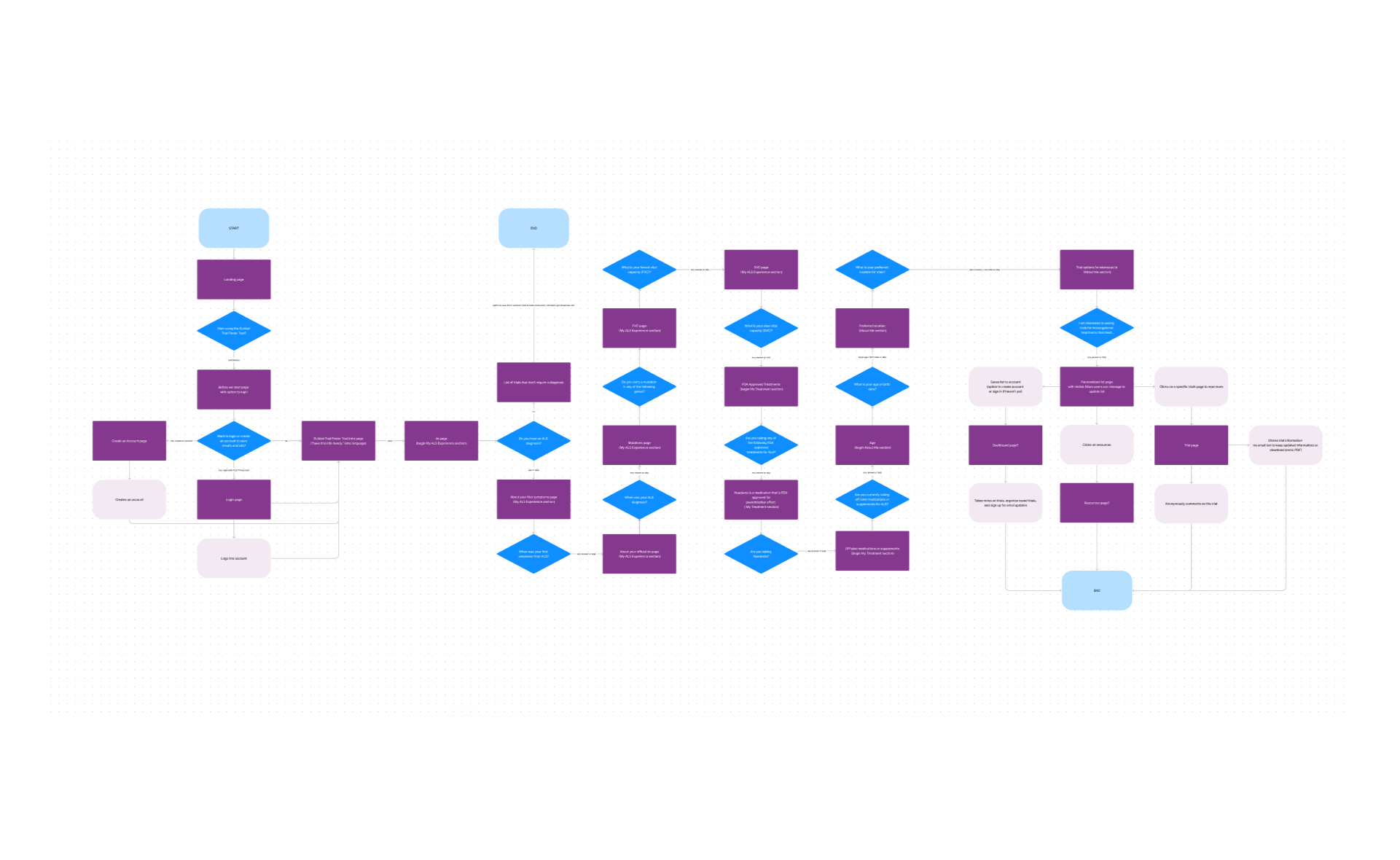
Creating new workflows for trial-matching logic and user flows across search, maps, saving tools, and notifications
Producing low-fidelity wireframes, high-fidelity prototypes, and complete design specifications for development
Ensuring that accessibility, inclusivity, and clarity were embedded throughout the experience
My work spanned research, strategy, information architecture, interaction design, visual design, and cross-functional communication.
Users and User Needs
The primary users included:
People living with ALS
Caregivers and family members
Clinicians or care team members
User needs centered around:
Clear, approachable guidance regardless of medical knowledge level
A simplified path to finding relevant trials without needing to understand complex clinical jargon
The ability to filter, sort, and explore trials through multiple modalities (maps, lists, guided questionnaire)
Saved results to discuss with medical teams
Transparent explanations that support understanding without overwhelming users
A trustworthy, modern interface that feels supportive rather than clinical or intimidating
User-Centered Design
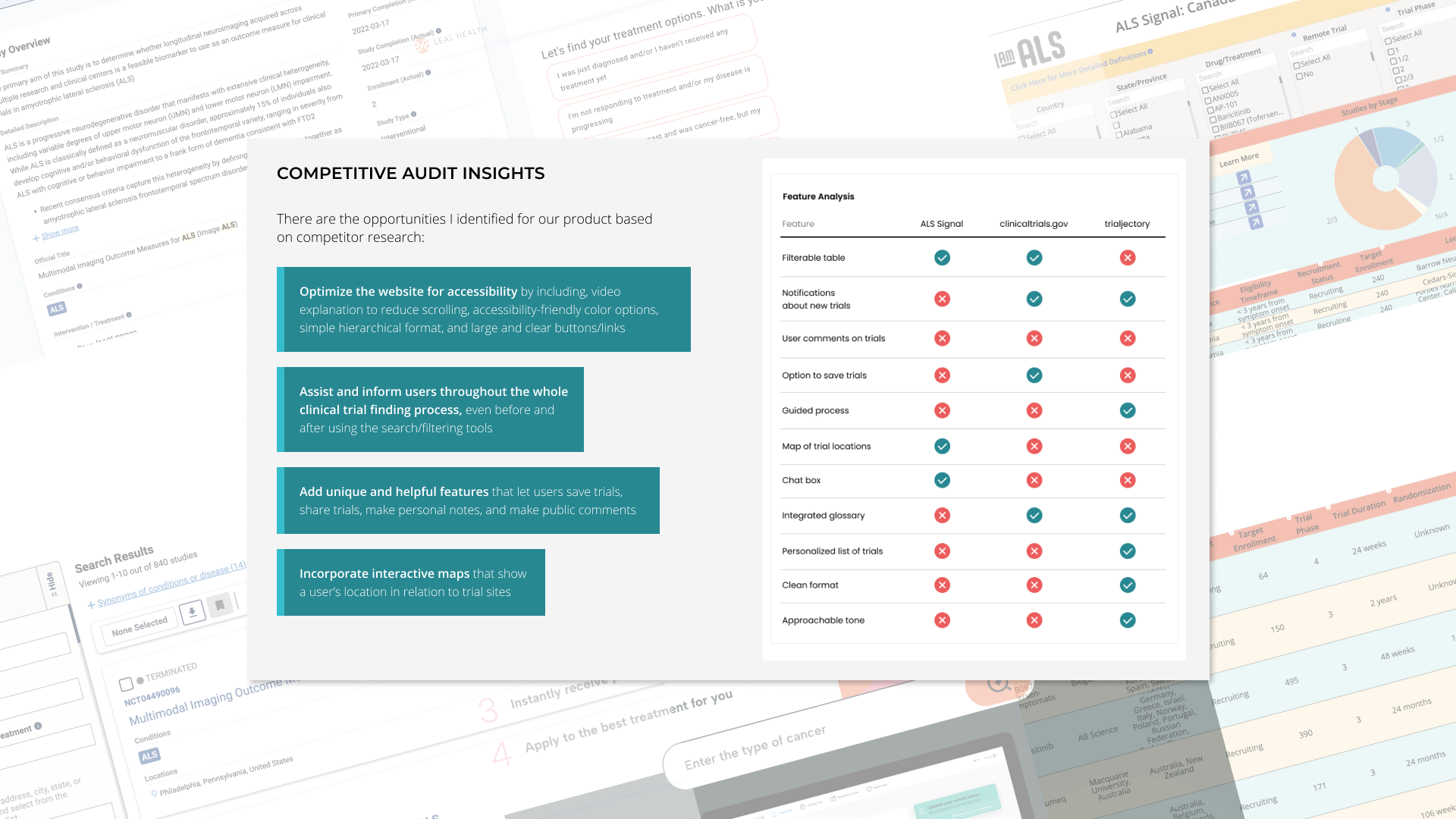
1. Competitive Analysis
Reviewed existing clinical trial finders to identify opportunities, gaps, and accessibility issues.
2. User Interviews & Personas
Conducted interviews with ALS patients and caregivers; created personas and journey maps to represent diverse experience levels and emotional states.
3. Workflow & IA
Developed new workflows for trial matching, search filtering, saving results, and notification settings. Reorganized the information architecture to support clarity and findability.
4. Wireframes & Prototypes
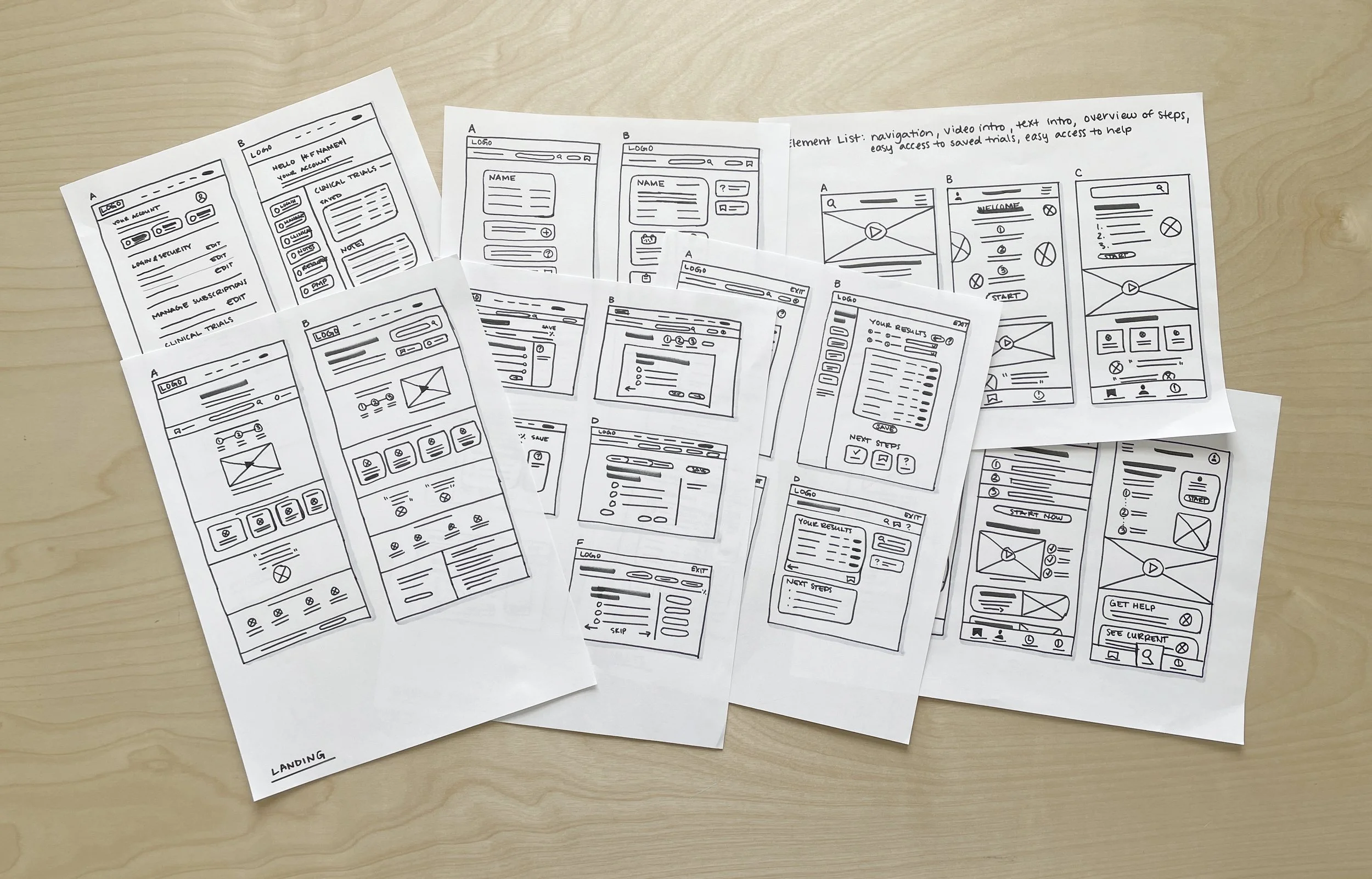
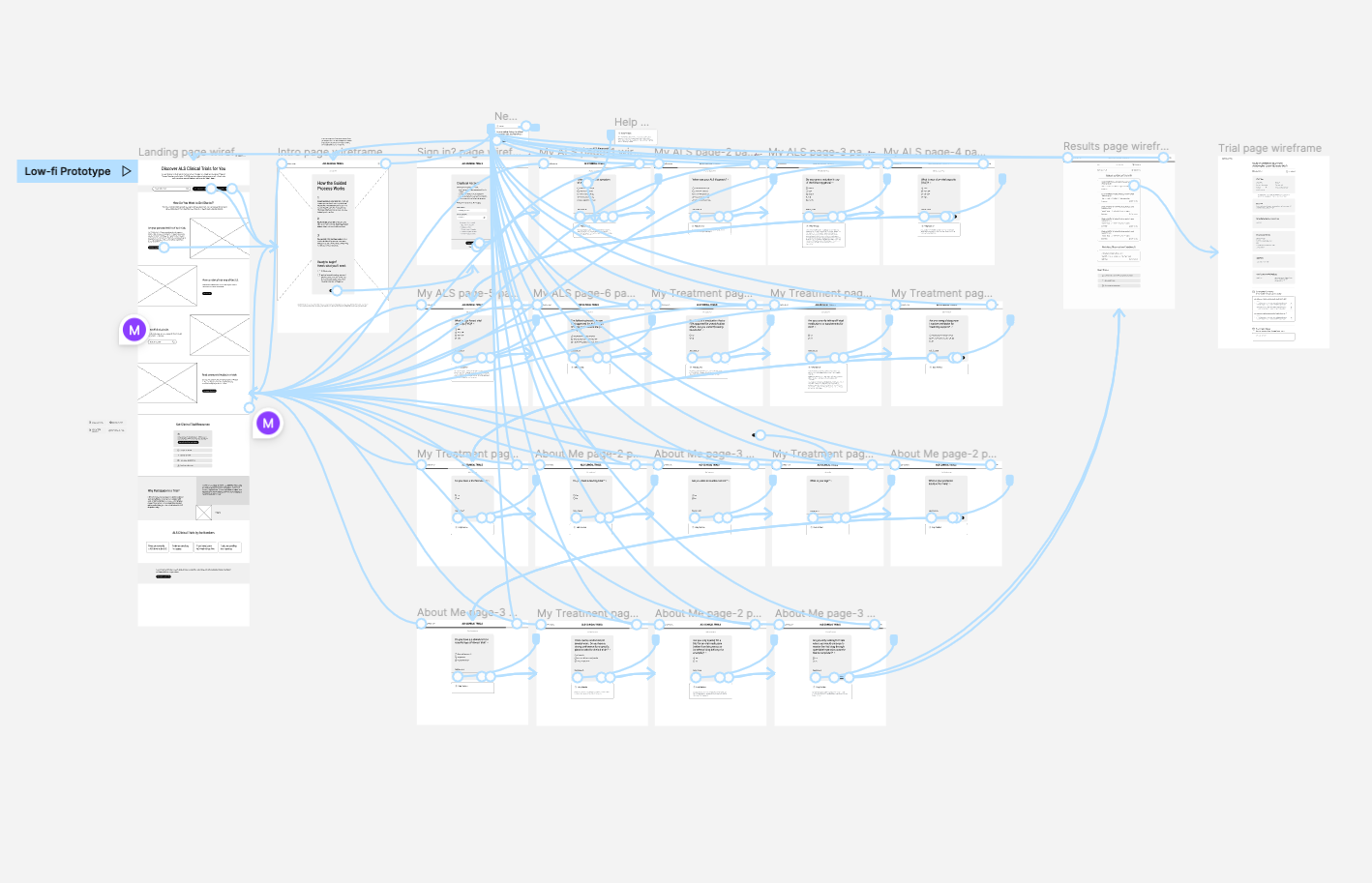
Created paper sketches, digital wireframes, and low-fidelity Figma prototypes to explore interaction models and information layout.
5. Iteration Through Feedback Loops
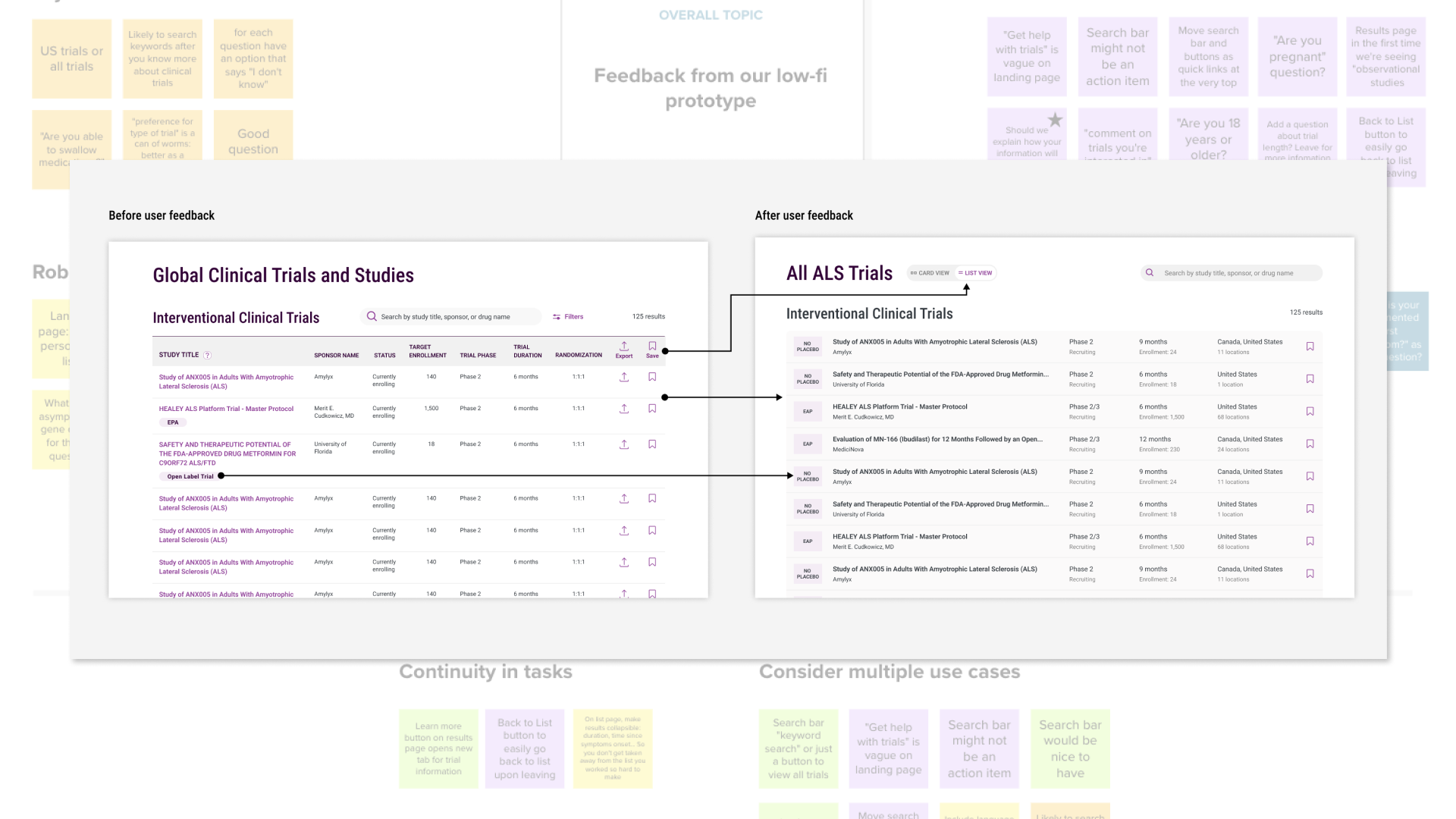
Used affinity mapping to distill feedback from interviews and design reviews into actionable insights that informed iterative improvements.
Design Solutions
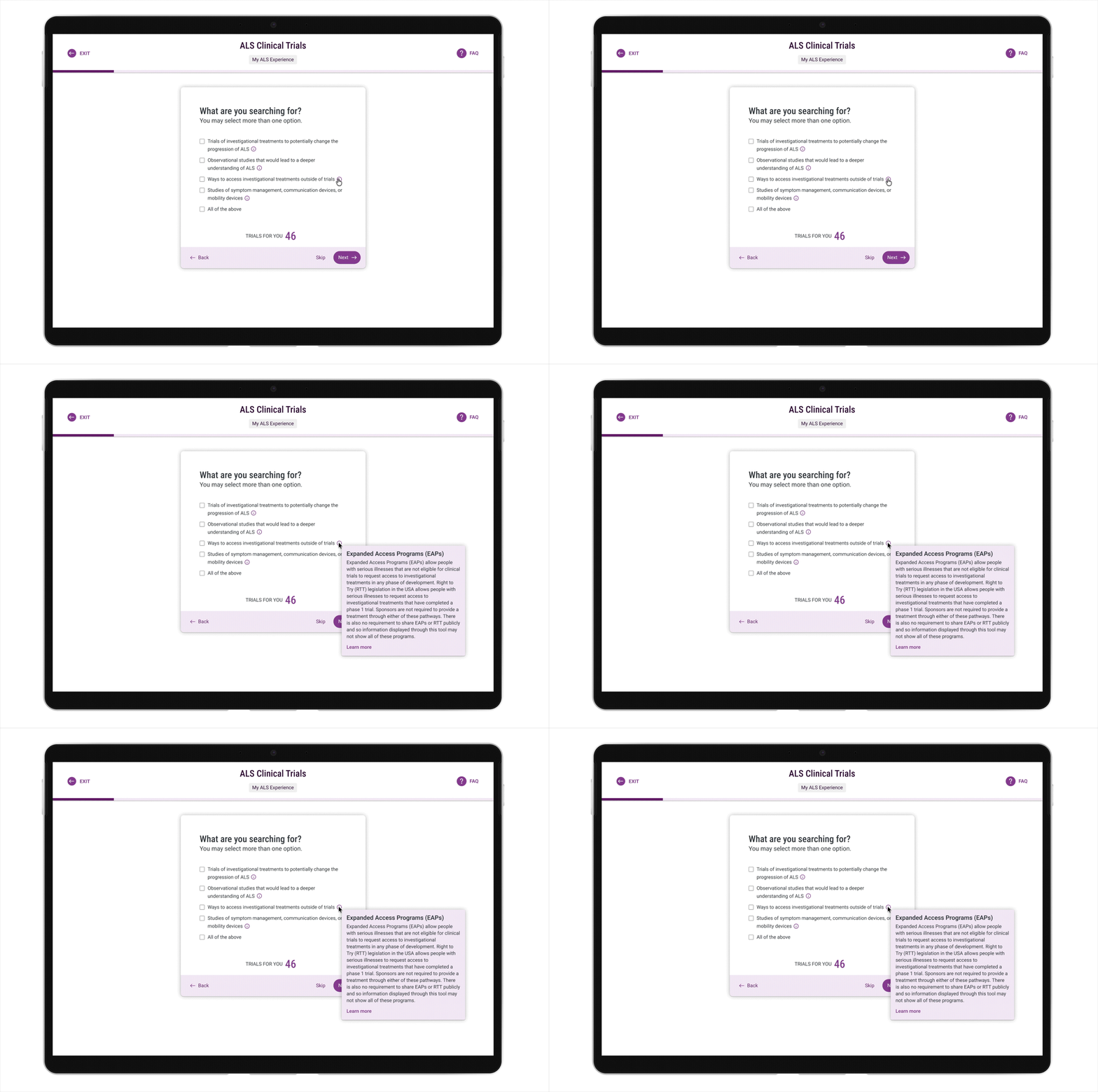
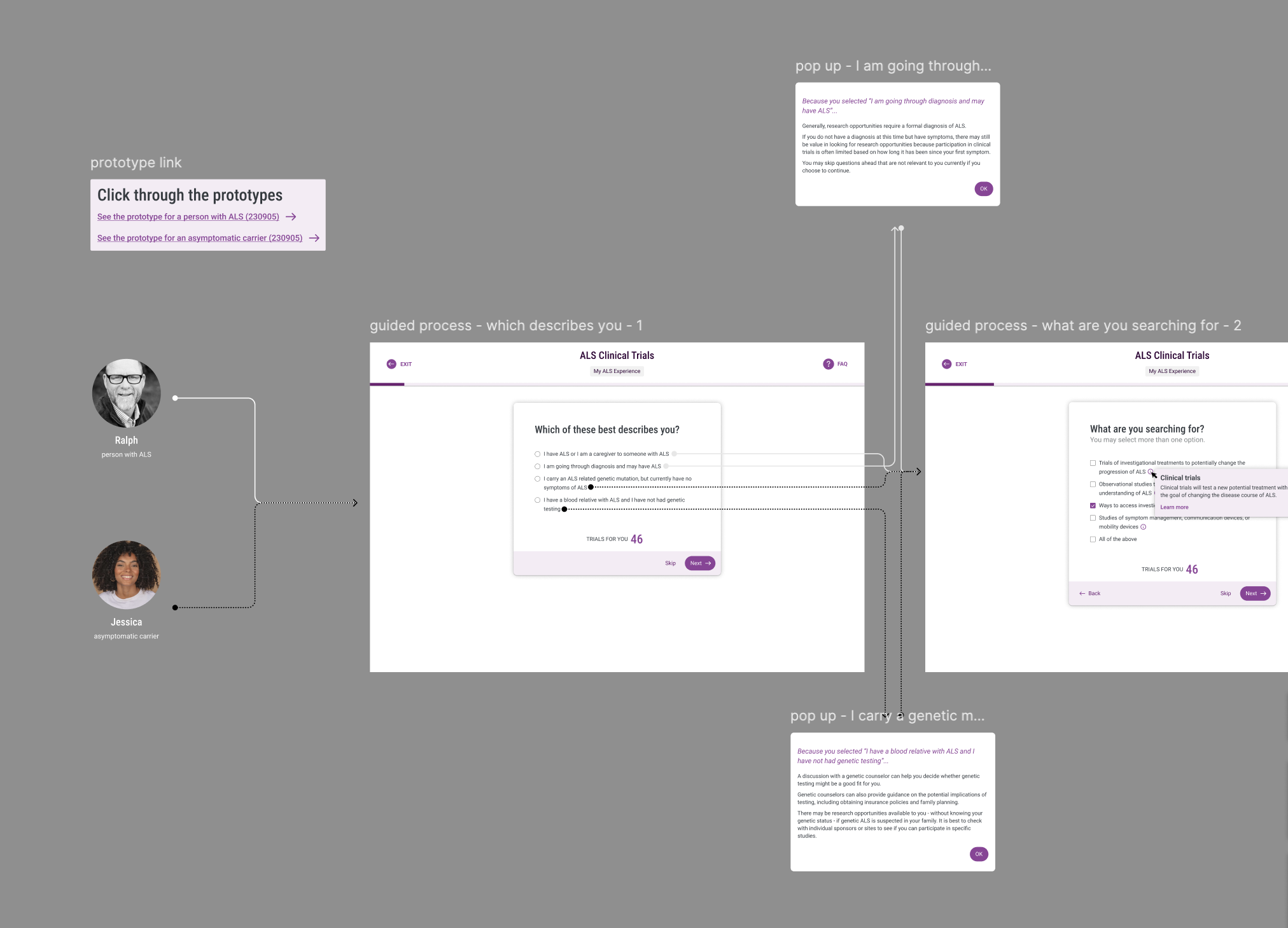
Guided Clinical Trial Questionnaire
A step-by-step tool that asks users clear, approachable questions and generates a personalized list of matching trials, balancing comprehensiveness with accessibility.
Inclusive, Contextual Information
Explanatory content embedded throughout the interface helps users understand terminology, phases, and trial requirements without overwhelming them.
Multi-Tool Ecosystem for Trial Discovery
Designed a suite of complementary tools:
Interactive map of trial sites
Advanced filtered search with customizable options
Saved trials to share with care teams
Notifications and monitoring to alert users of new or updated trials
Actionable Landing Page
A redesigned landing page that clearly surfaces the primary ways to explore clinical trials (maps, guided matching, or customized search) reducing friction and setting clear expectations
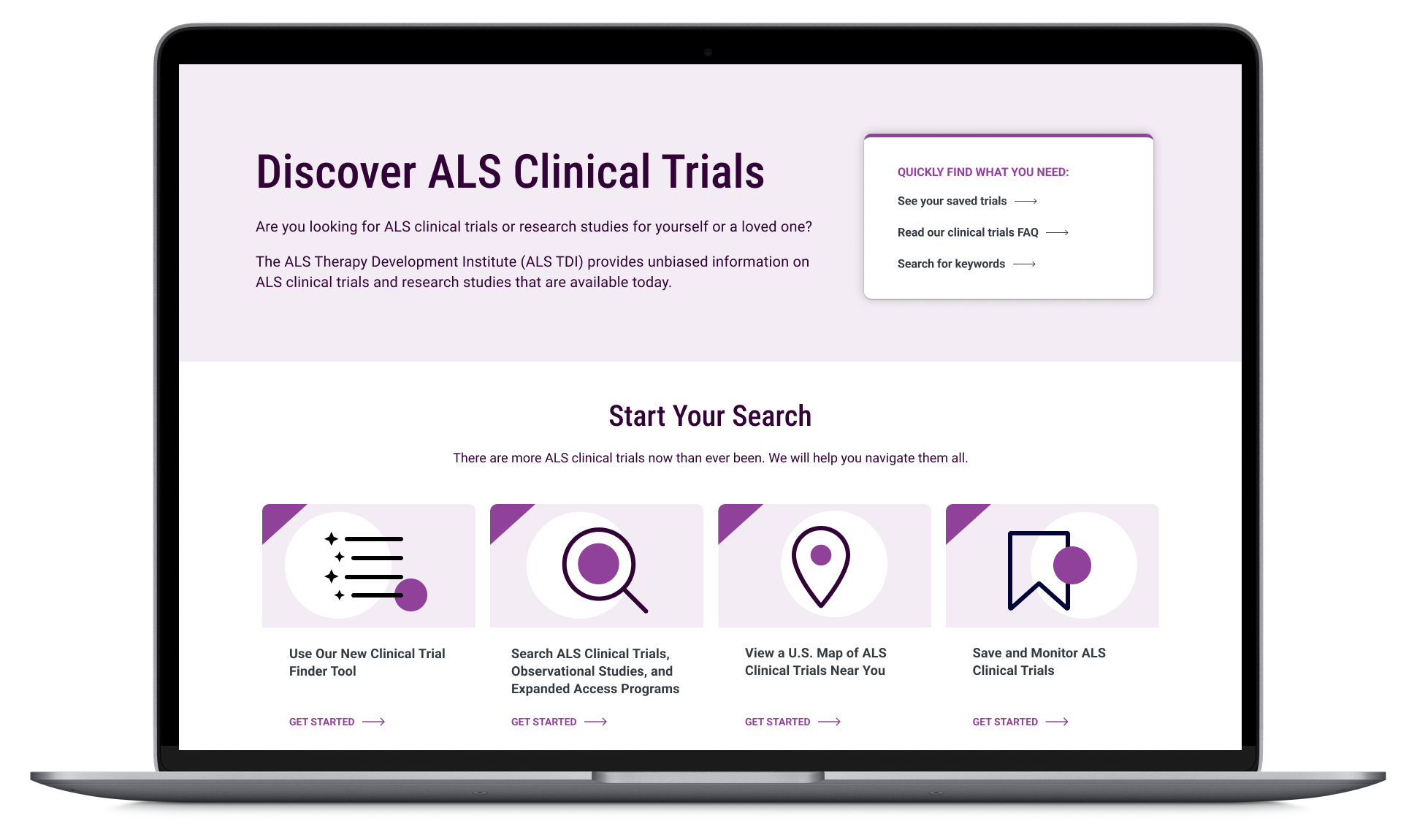
Modern, Accessible UI & Branding
A clean, trusted, and friendly UI system that highlights key features like saving trials, provides visual hierarchy, and supports responsive layouts for desktop and mobile.
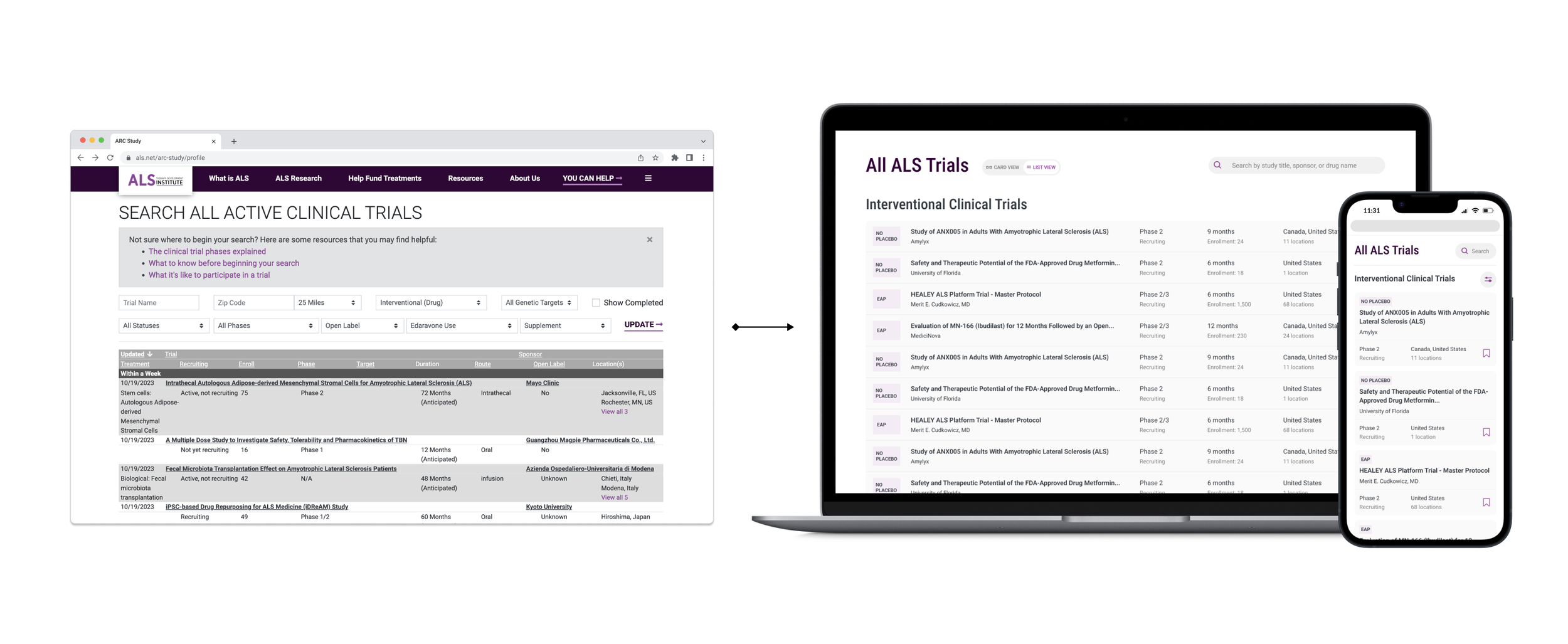
Search page before and after the redesign
Deliverables
Low- and high-fidelity Figma prototypes
Full set of UX flows and system workflows
Responsive UI designs for desktop and mobile
Design specifications and documentation for development
User research insights and affinity-mapped findings
Outcomes
✓ Accessible, Educational Trial Matching: Users receive a balanced combination of guidance and detailed questions, regardless of their place in the ALS journey or familiarity with clinical research.
✓ Improved User Empowerment & Clarity: Contextual explanations help users understand trial terminology and requirements, reducing confusion and anxiety.
✓ Multiple Pathways for Trial Discovery: Maps, search tools, saved results, and a guided questionnaire give users flexibility and control, addressing the needs of different comfort levels and browsing styles.
✓ Responsive, User-Friendly Design: The tools are accessible across desktop and mobile, supporting users and caregivers wherever and however they search.
✓ Stronger Brand Trust & Engagement: A friendly, modern interface reinforces program credibility and encourages users to explore clinical trials as part of their care plan.
What I learned
Close collaboration with users throughout the design process is essential for building tools that accommodate different knowledge levels and emotional contexts.
Competitive audits helped highlight industry gaps and guided opportunities for differentiation and accessibility.
Designing complex questionnaires requires thoughtful sequencing, clear language, and strong information architecture to avoid overwhelming users.
Working cross-functionally with experts and developers ensured designs were medically accurate, user-friendly, and buildable.