Nonprofit Biotech Website - Research Institution Redesign

ALS TDI is a nonprofit biotech research institution dedicated exclusively to discovering treatments for ALS. I partnered with their team to redesign the organization’s website to better support people impacted by ALS, communicate complex research in accessible ways, and increase engagement through donations, resources, and community participation.
The redesign balanced emotional storytelling with clarity and usability—helping users quickly understand ALS TDI’s mission, explore research initiatives, and confidently support critical work through donations.
User Interface
Responsive Website
User Experience
Brand Identity
Cross-functional Team Collaboration
The Challenge
The existing website struggled to clearly communicate ALS TDI’s mission, research impact, and community-driven approach. Key challenges included:
Improving overall usability and navigation across a content-heavy site
Streamlining the donation flow to reduce friction and increase conversions
Making complex research concepts easier to understand for non-expert audiences
Increasing accessibility for users with limited motor function through responsive design and clearer information hierarchy
Better highlighting the role of community in advancing ALS research
If these challenges weren’t addressed, users could feel overwhelmed, disconnected from the mission, or unable to complete key actions like donating or finding resources.
My Role
I was the only and lead UX/UI designer on this project, responsible for the end-to-end redesign of the ALS TDI website. I collaborated closely with organizational stakeholders and subject-matter experts, led user-centered research and analysis, and translated insights into intuitive, accessible design solutions.
My responsibilities included UX strategy, information architecture, interaction design, visual design, prototyping, user testing, and developer handoff.
Users & User Needs
Primary Users
People living with ALS
Caregivers and family members
Donors and supporters
Researchers and advocates
Key User Needs
Quickly understand ALS TDI’s mission and impact
Access resources and research information without being overwhelmed
Feel emotionally connected to the organization and its community
Complete donations easily and confidently
Navigate the site across devices and accessibility needs
User-Centered Design
Research & Discovery
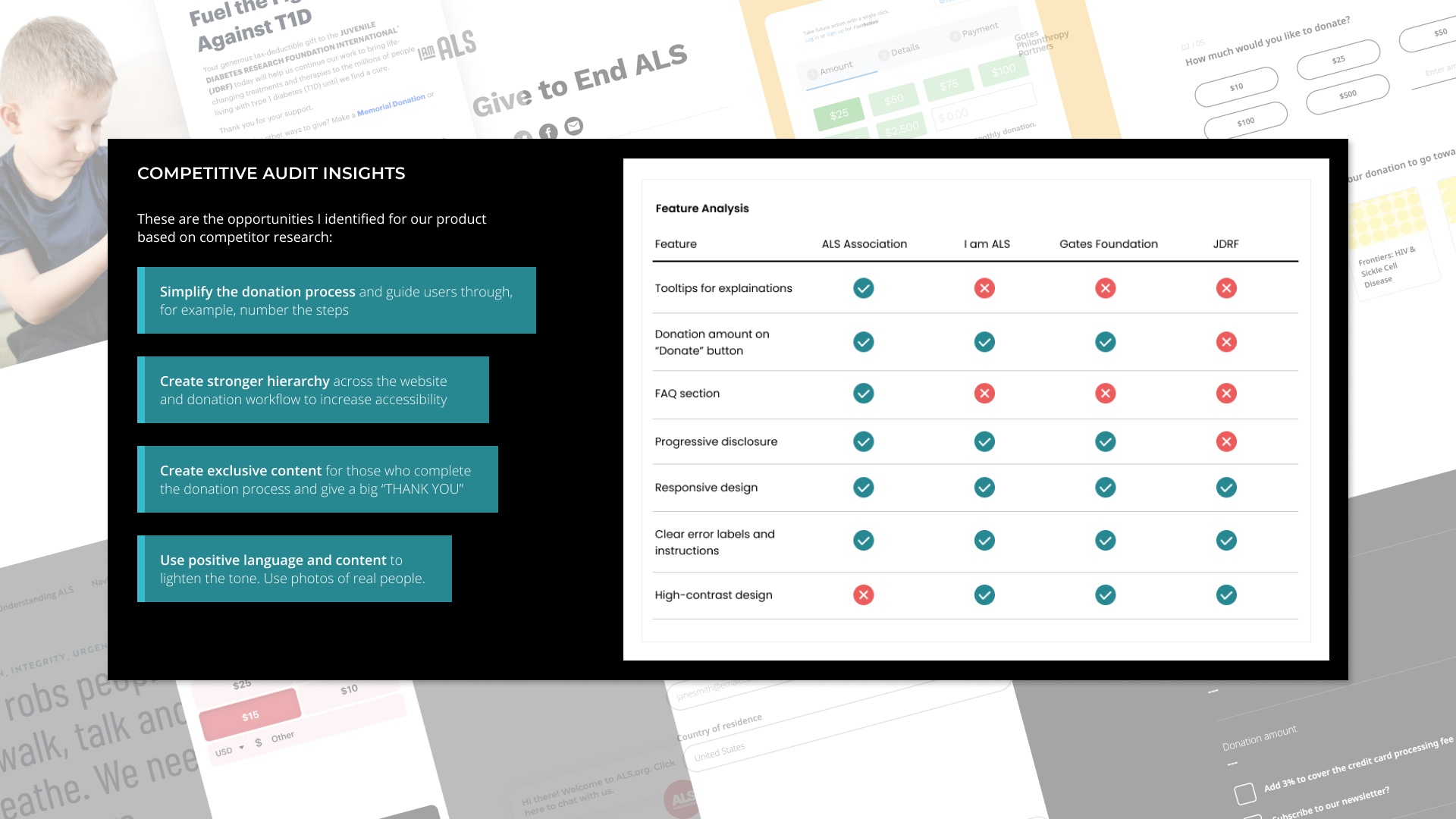
Competitive analysis and UX audit of similar nonprofit and research websites
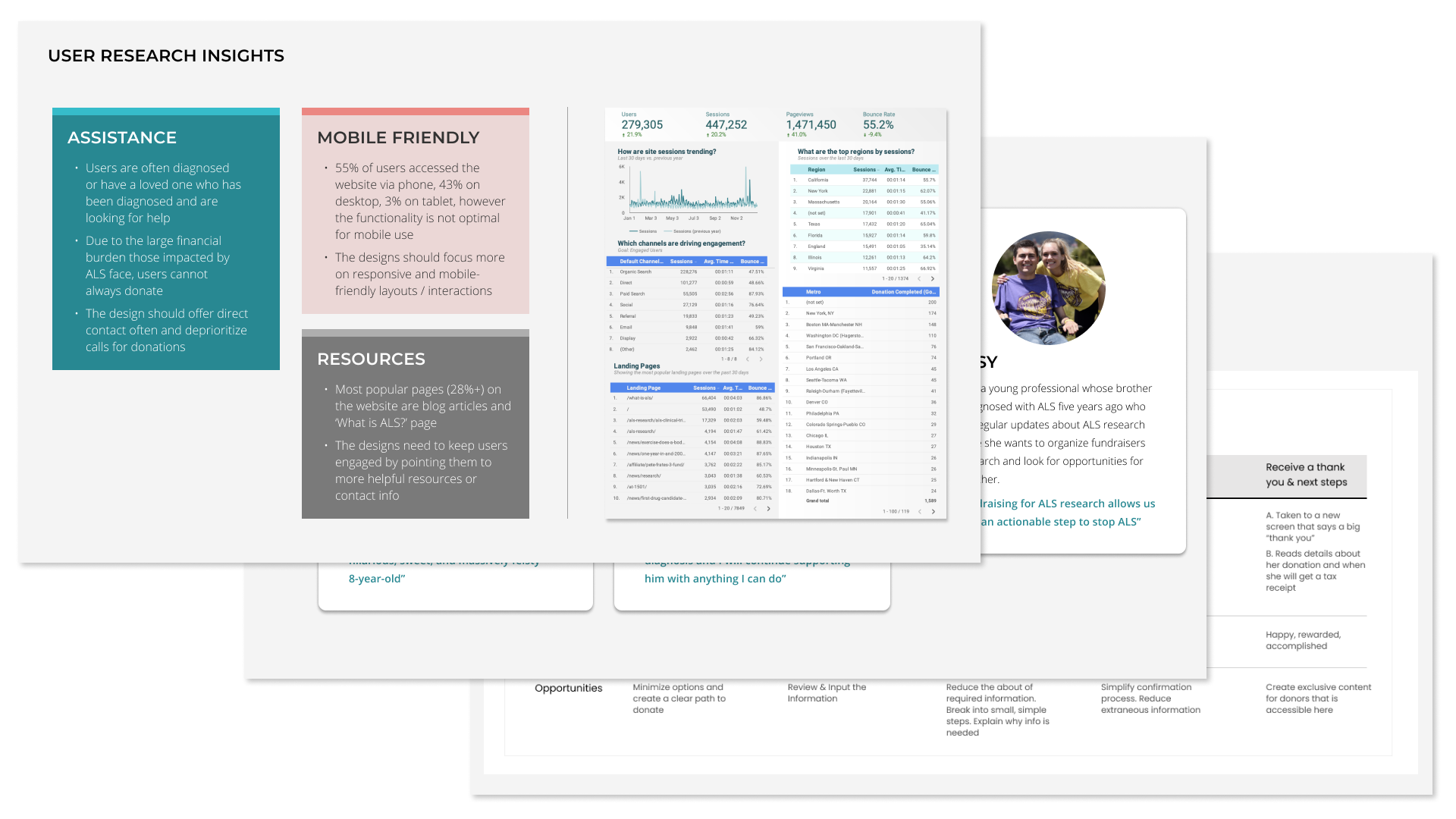
Review of site analytics to identify drop-off points and high-traffic pages
Personas and journey maps for key workflows (donating, learning about research, subscribing to updates, participating in events)
Design & Iteration
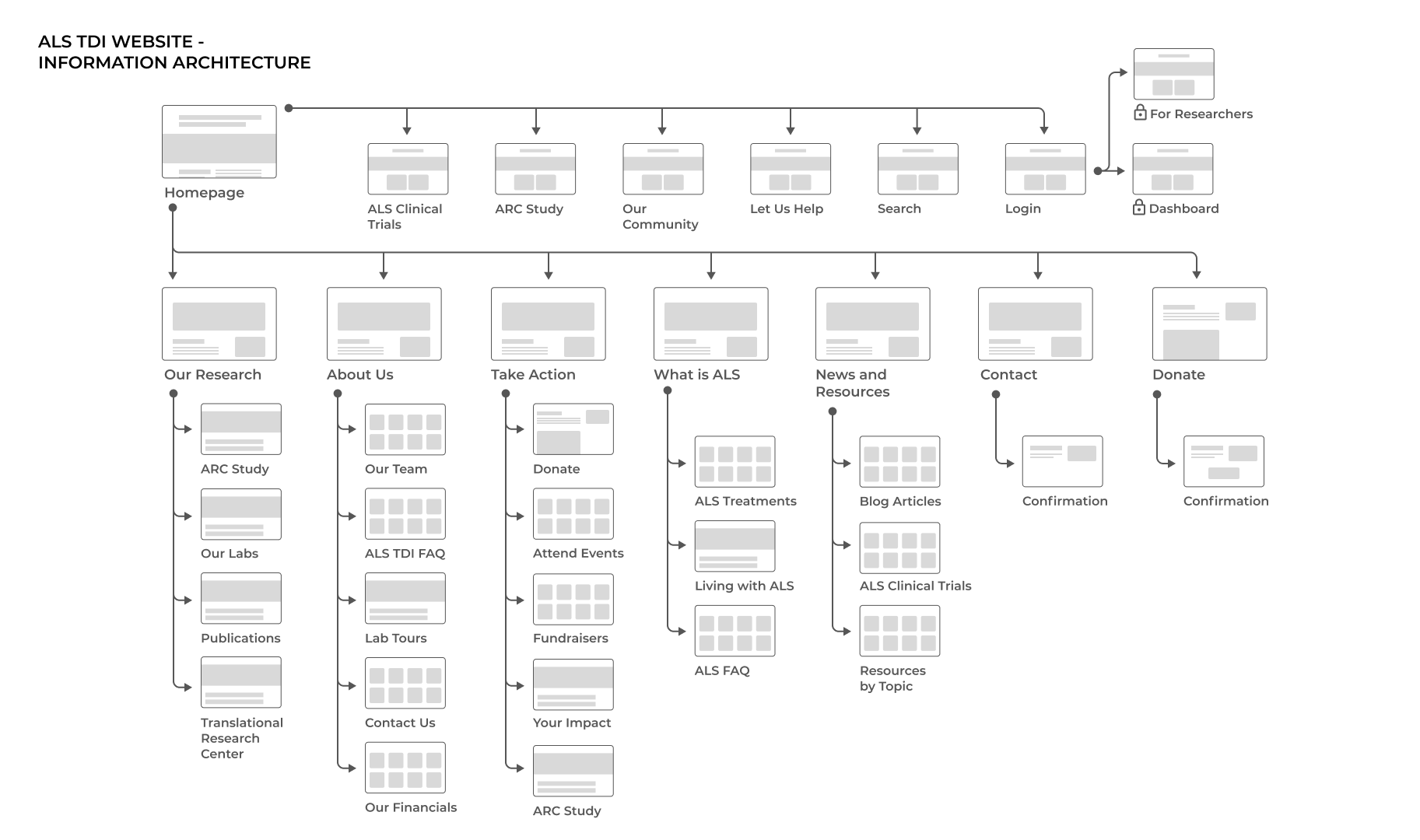
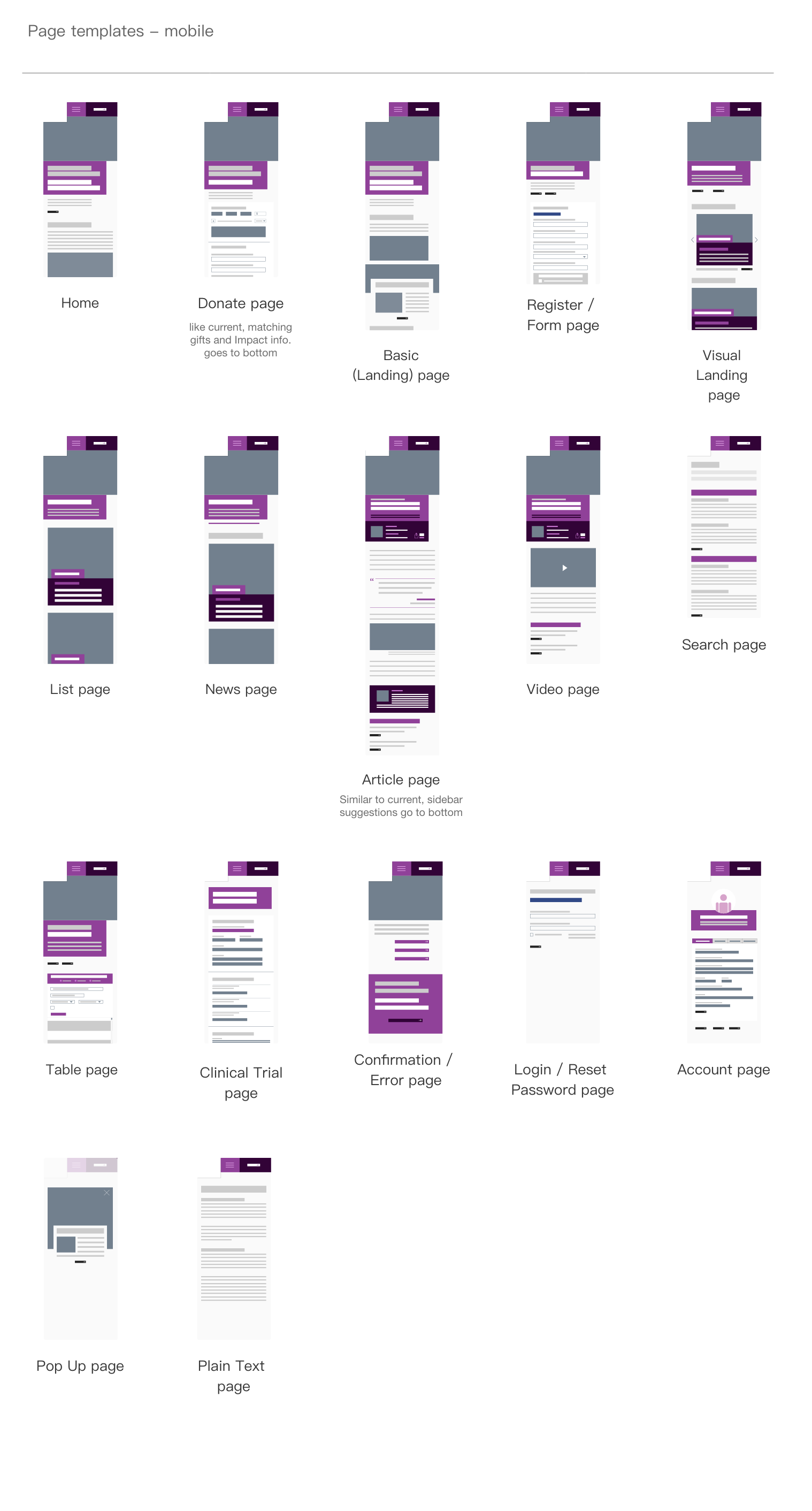
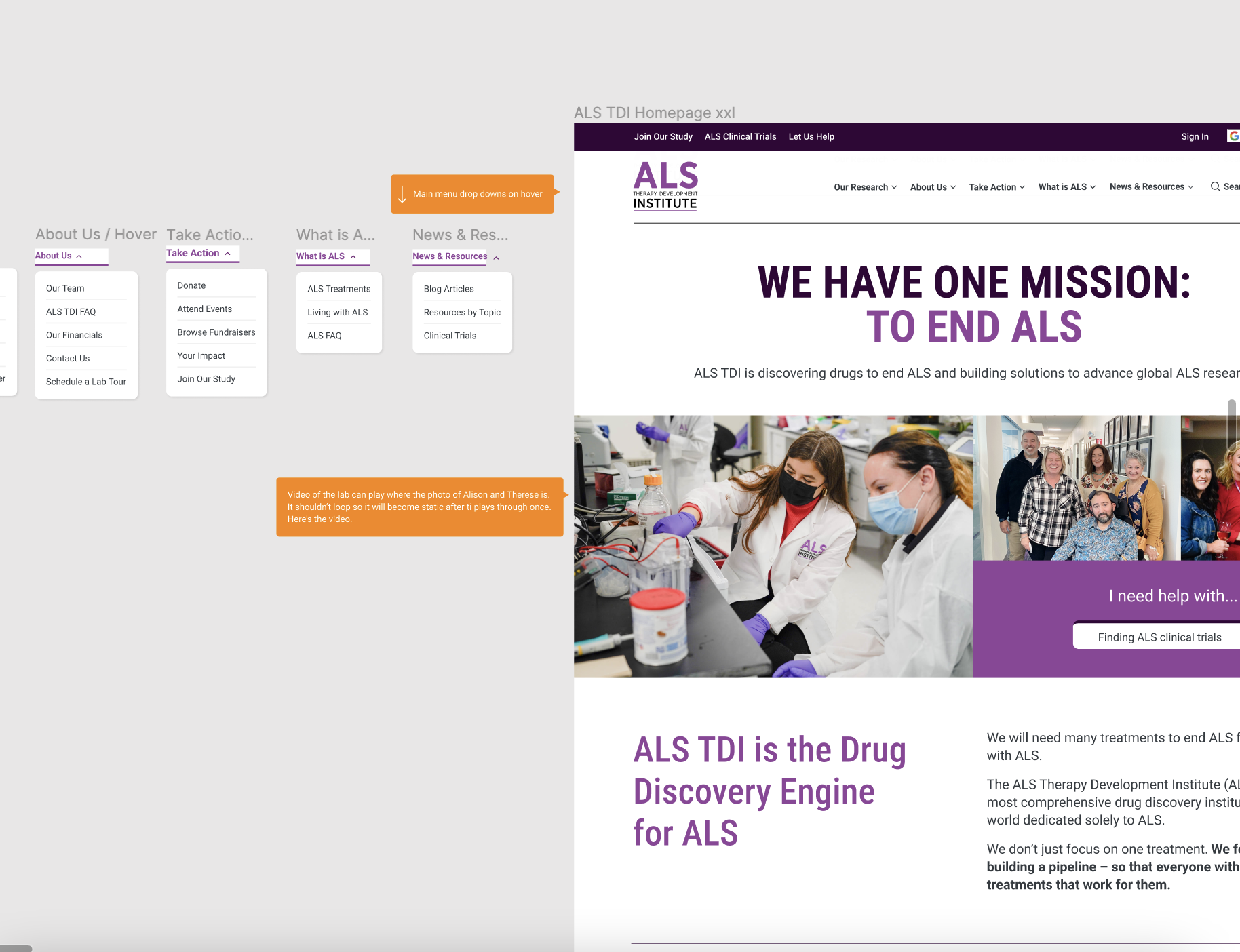
Information architecture and sitemap redesign to improve navigation and content hierarchy
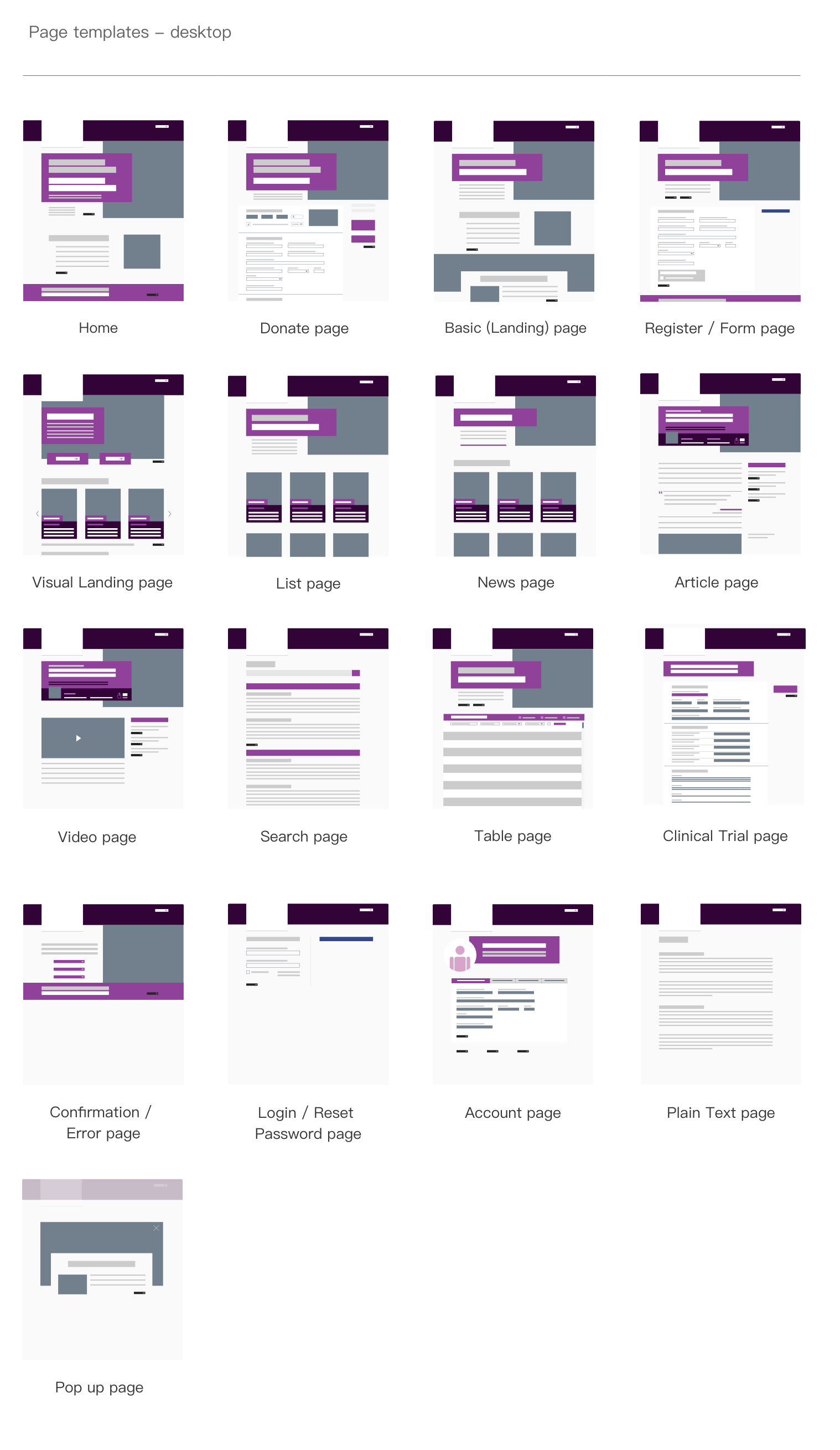
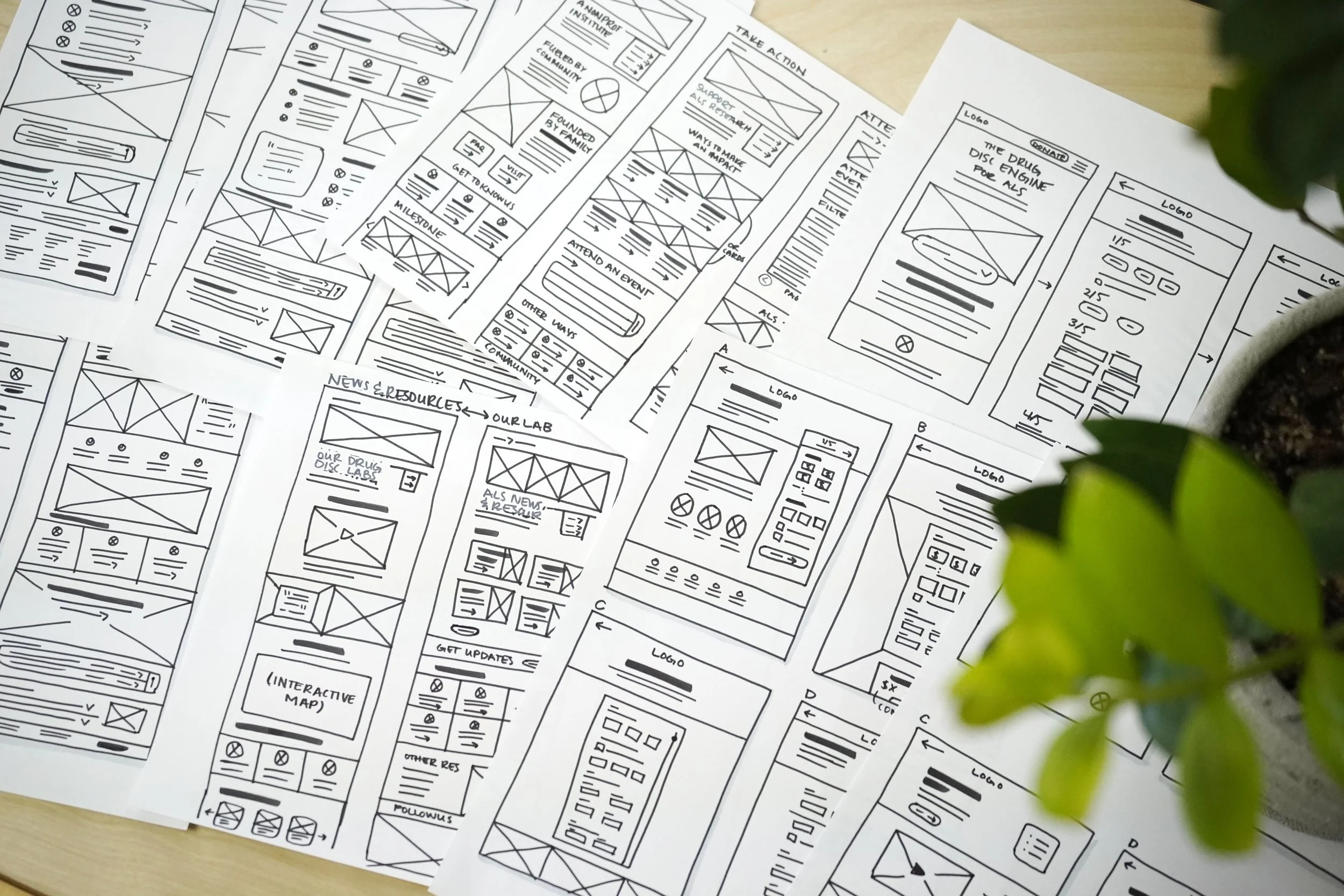
Paper and digital wireframes to explore layout and workflow improvements
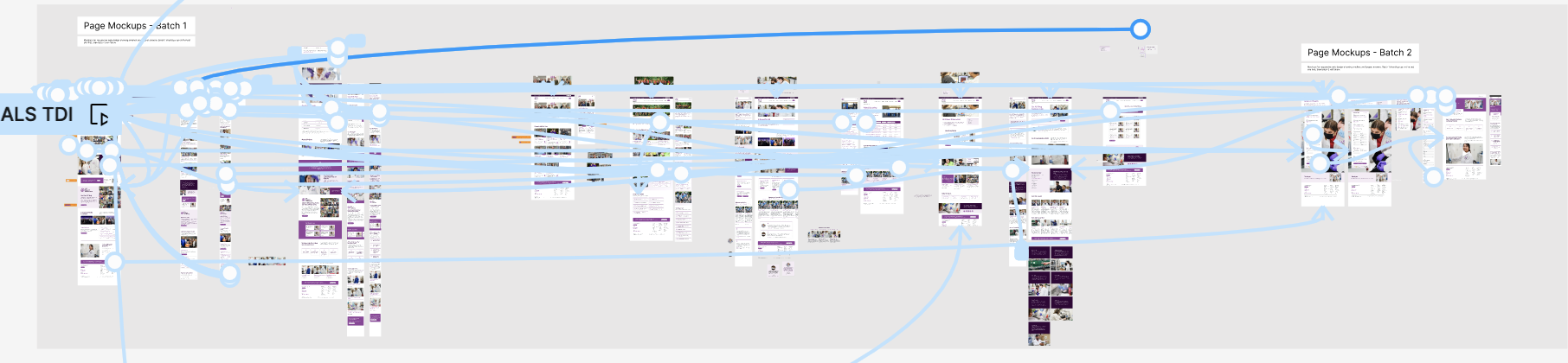
High-fidelity Figma prototypes for user testing and stakeholder reviews
User Feedback & Insights
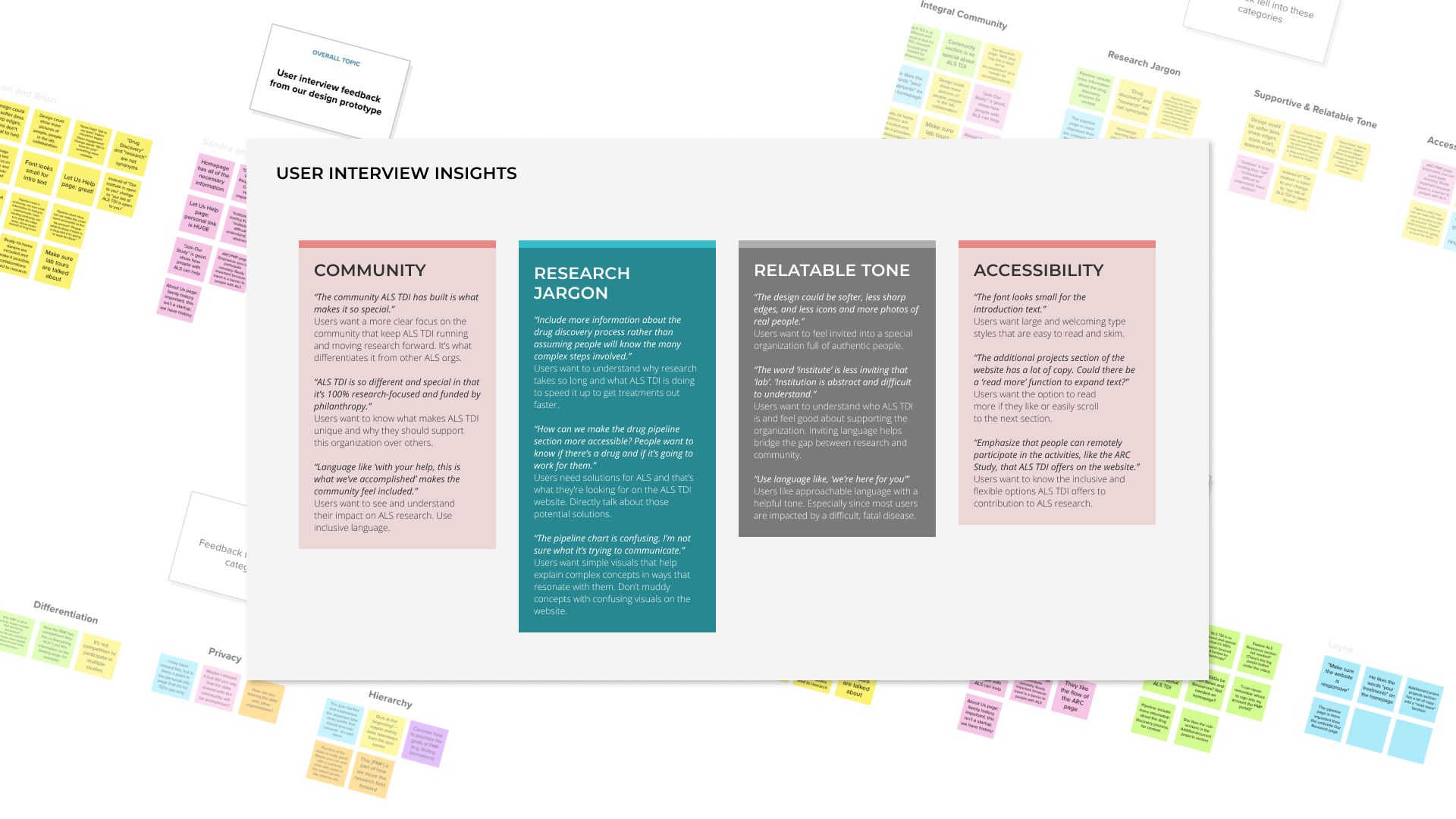
User testing and reviews surfaced key insights that directly influenced the design:
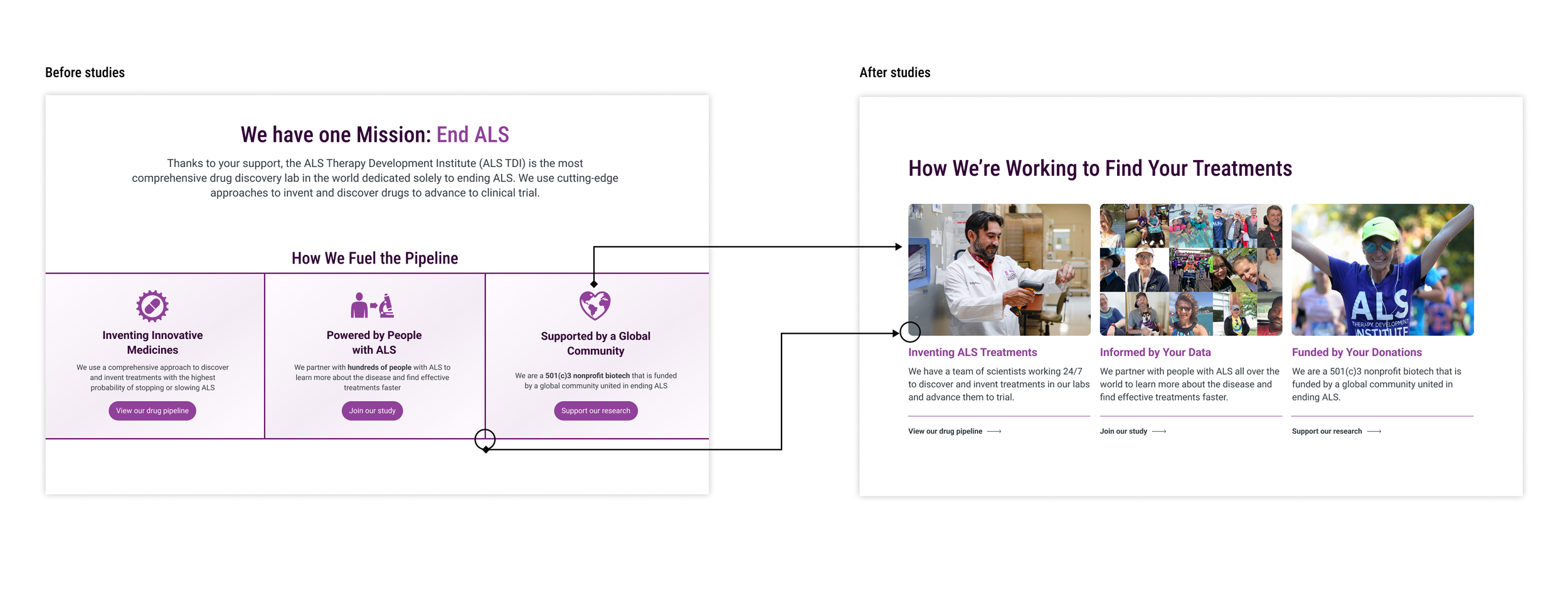
Users wanted a stronger emphasis on the community that makes ALS TDI’s research possible
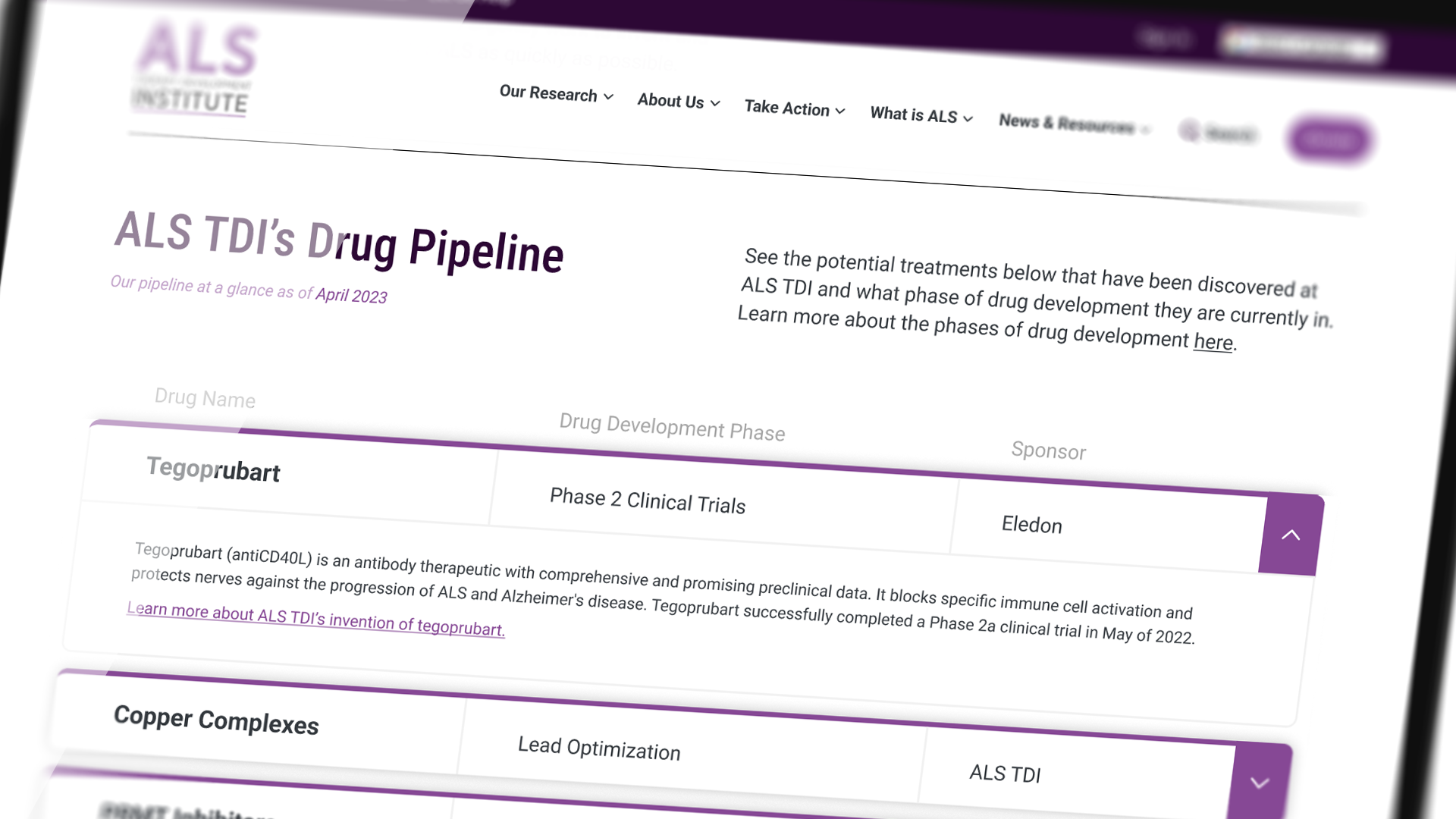
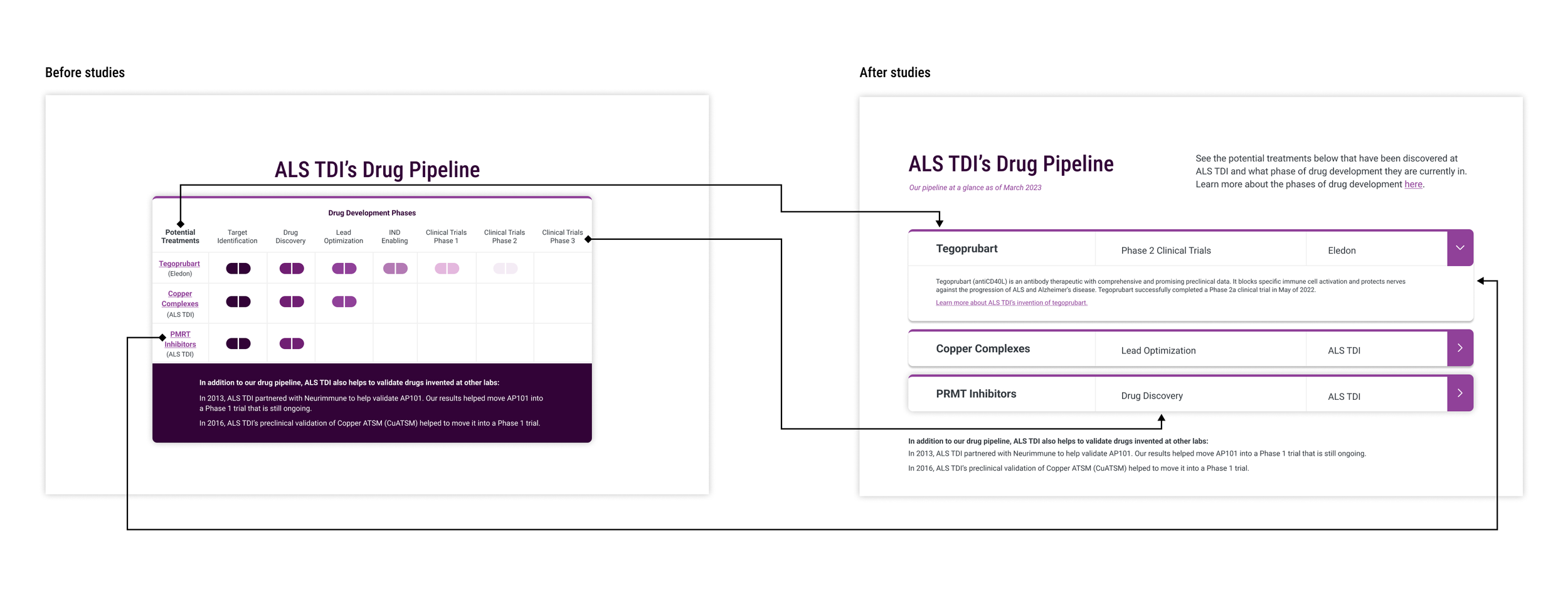
Complex visuals, like the research pipeline chart, needed to be simplified to avoid confusion
Softer visuals and more photography of real people created a more inviting, human experience
Long blocks of content benefited from expandable “read more” patterns
Users wanted clearer visibility into remote participation options, such as studies and programs they could join from home
All feedback was documented and addressed through iterative design refinements.
Design Solutions
Mission-Driven, Human-Centered Design
Balanced scientific credibility with emotional storytelling
Highlighted real people, researchers, and community members throughout the site

Simplified Navigation & Information Architecture
Clear, intuitive navigation and calls to action
Organized content to help users quickly find resources, research, and ways to get involved
Accessible Research Communication
Redesigned the drug pipeline to be transparent and approachable
Layered information so users could skim or dive deeper based on interest and expertise
Streamlined Donation Experience
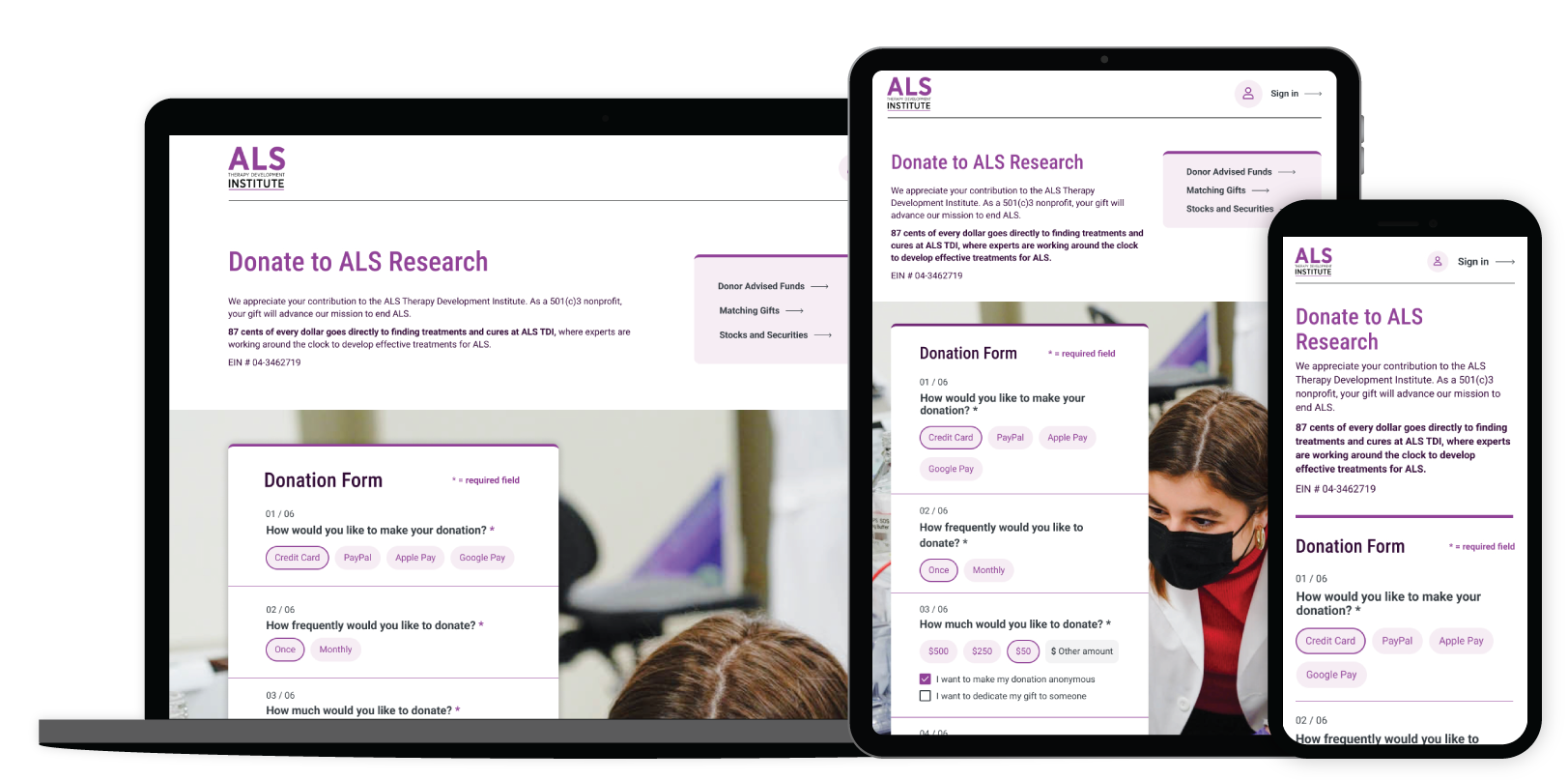
Introduced numbered steps and clearer guidance throughout the donation flow
Added a confirmation section and a redesigned thank-you page featuring an exclusive video from ALS TDI scientists to reinforce impact
Responsive & Scalable Design
Fully responsive design across devices
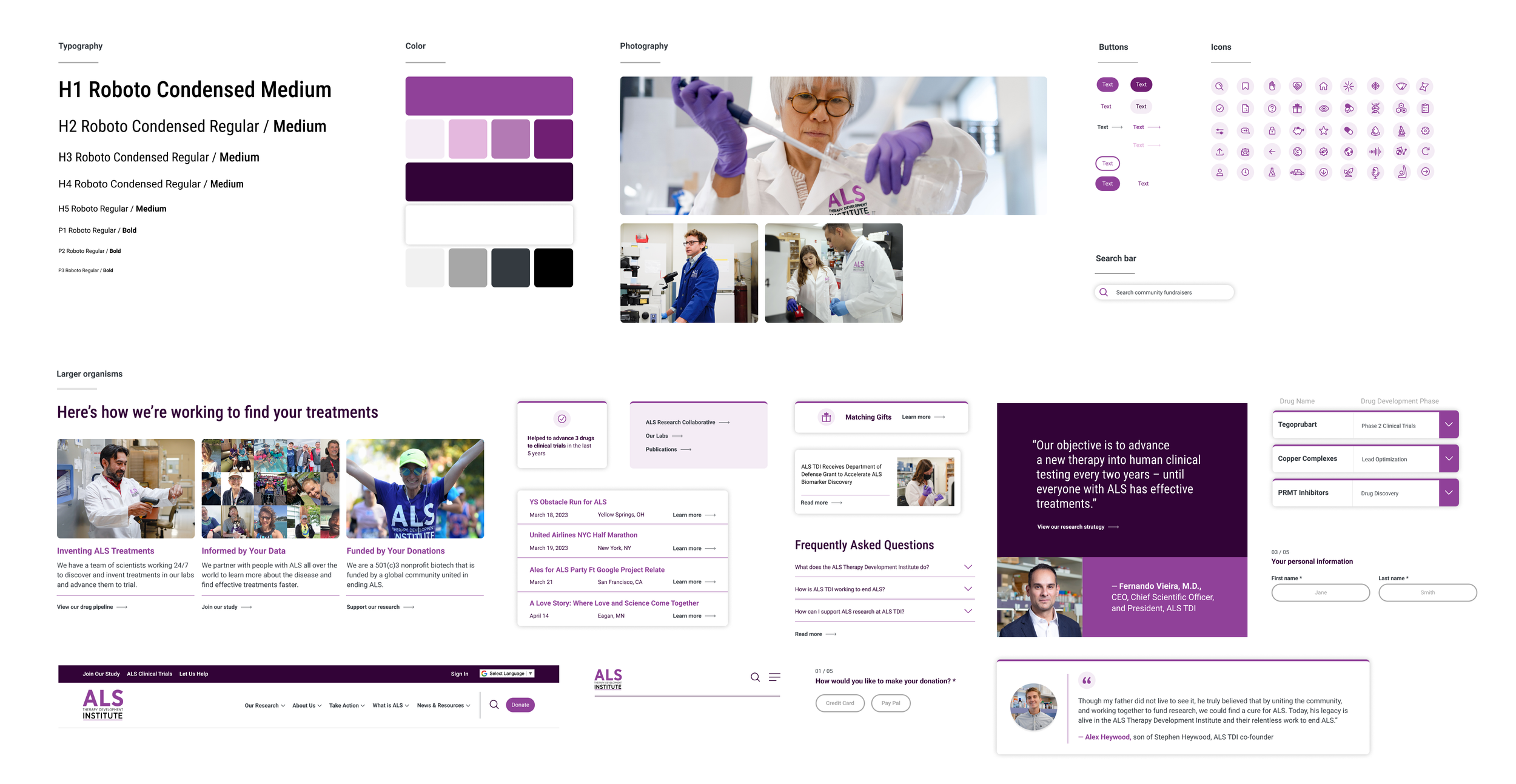
Optimized atomic design system in Figma with reusable components and a custom icon set

Deliverables
Information architecture and sitemap
Wireframes and workflow diagrams
High-fidelity Figma prototypes for user testing and stakeholder review
Annotated Figma files for developer handoff
Component-based design system and custom iconography
Outcomes
✓ 11% decrease in bounce rate
✓ 33% increase in website traffic within 30 days of launch
✓ Improved clarity around ALS TDI’s mission and research impact
✓ More intuitive donation and engagement workflows
User Feedback
“The clean look of the website allowed me to quickly find the fundraising resources I needed to support this nonprofit that helped my husband and I while he was living with ALS.”
— Mia, caregiver
“ALS TDI has a unique history of being started by a family and continues to rely on families to keep the research moving forward. The website shows that community engagement and partnership.”
— Kevin, living with ALS
What I learned
Clear information hierarchy is essential for content-heavy websites
Simple, intuitive workflows reduce friction for emotionally charged tasks like donating
Real imagery and authentic storytelling build trust and connection
Pairing qualitative user feedback with quantitative analytics leads to stronger design decision