Inclusive Print Design - Accessible Book Collaboration
Overview
This project consists of two handcrafted books exploring different user experiences: one documenting my own design journey, and one created in close collaboration with a visually impaired student, India, to tell her story. Together, the books examine how designing with accessibility and empathy at the center can create richer, more meaningful experiences for everyone.
Visit the University of Michigan's Special Collections Library to experience two of my artists books and read about my thinking behind the project at the Stamps School of Art & Design's website.
I received a Certificate of Appreciation from the University of Michigan Council for Disability Concerns for my work on this project
My Role & Approach
I led the design, production, and binding of both books and worked closely with India over several months as a design collaborator. Through ongoing workshops, prototyping, and shared exploration, I approached the books as designed experiences, centering accessibility, agency, and storytelling over purely visual outcomes.
Design Questions & Challenges
How might a visual designer experience new ways of seeing?
How can designers collaborate with visually impaired users to improve how stories are told?
How can tactile, material, and spatial design communicate meaning alongside (or beyond) visual elements?
Users
Myself, as the primary user and storyteller for the personal book
India, a visually impaired student, as the primary user and co-creator of her book
Secondary users engaging with the books through reading and touch
User-Centered Design Process
The project emphasized deep collaboration and iterative experimentation.
Weekly reviews and hands-on workshops with India
Thumbnail sketches exploring pagination, pacing, and content structure
Book-shape studies to understand physical interaction and scale
Physical prototypes testing texture, weight, and usability
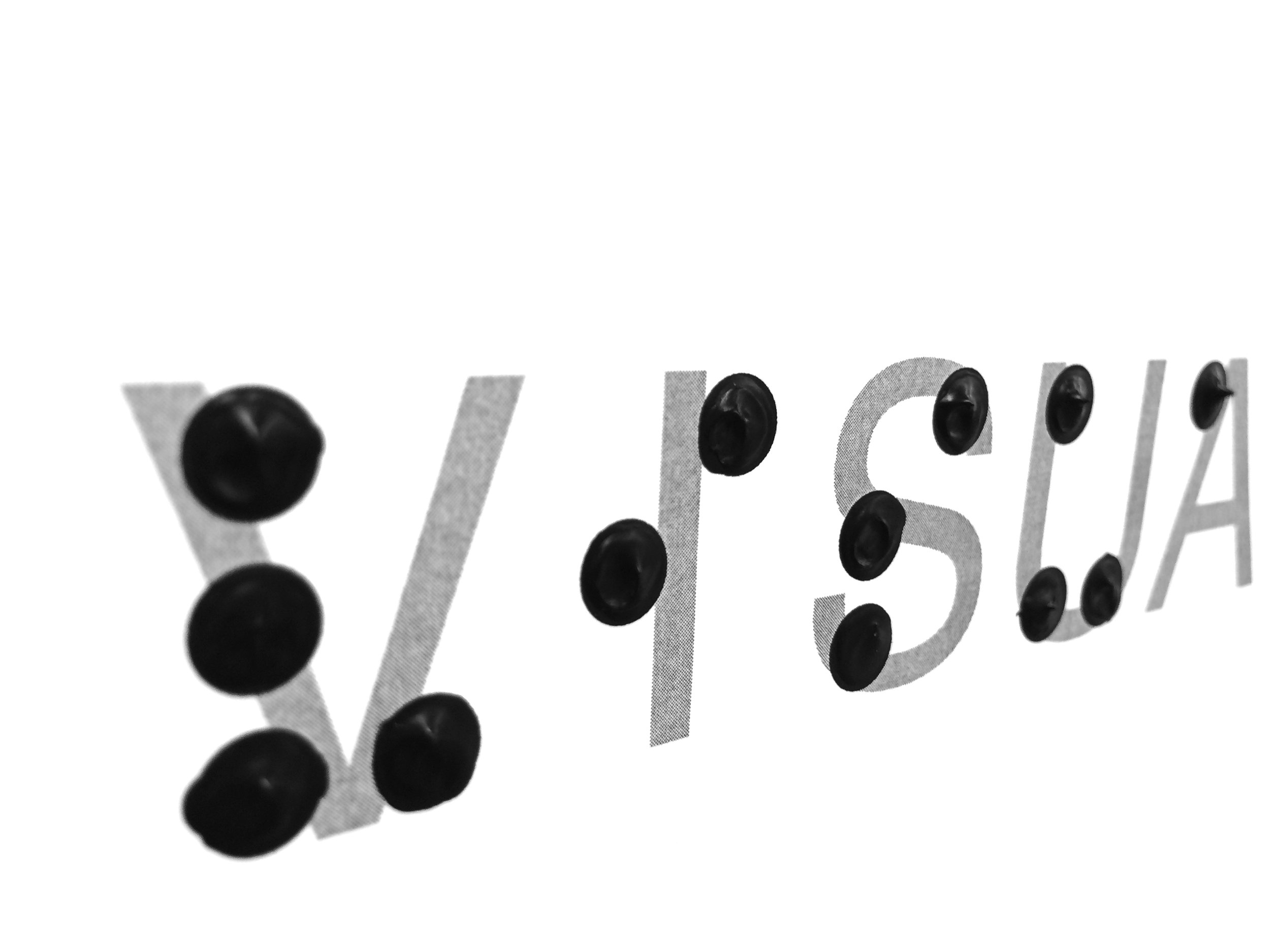
Printed text with painted textural Braille on top
Early Prototyping & Exploration
Experiments with paper textures, color contrast, and illustration
Tactile exercises, including learning and practicing Braille using egg cartons
Iterative physical mockups to evaluate how form and materials shaped understanding
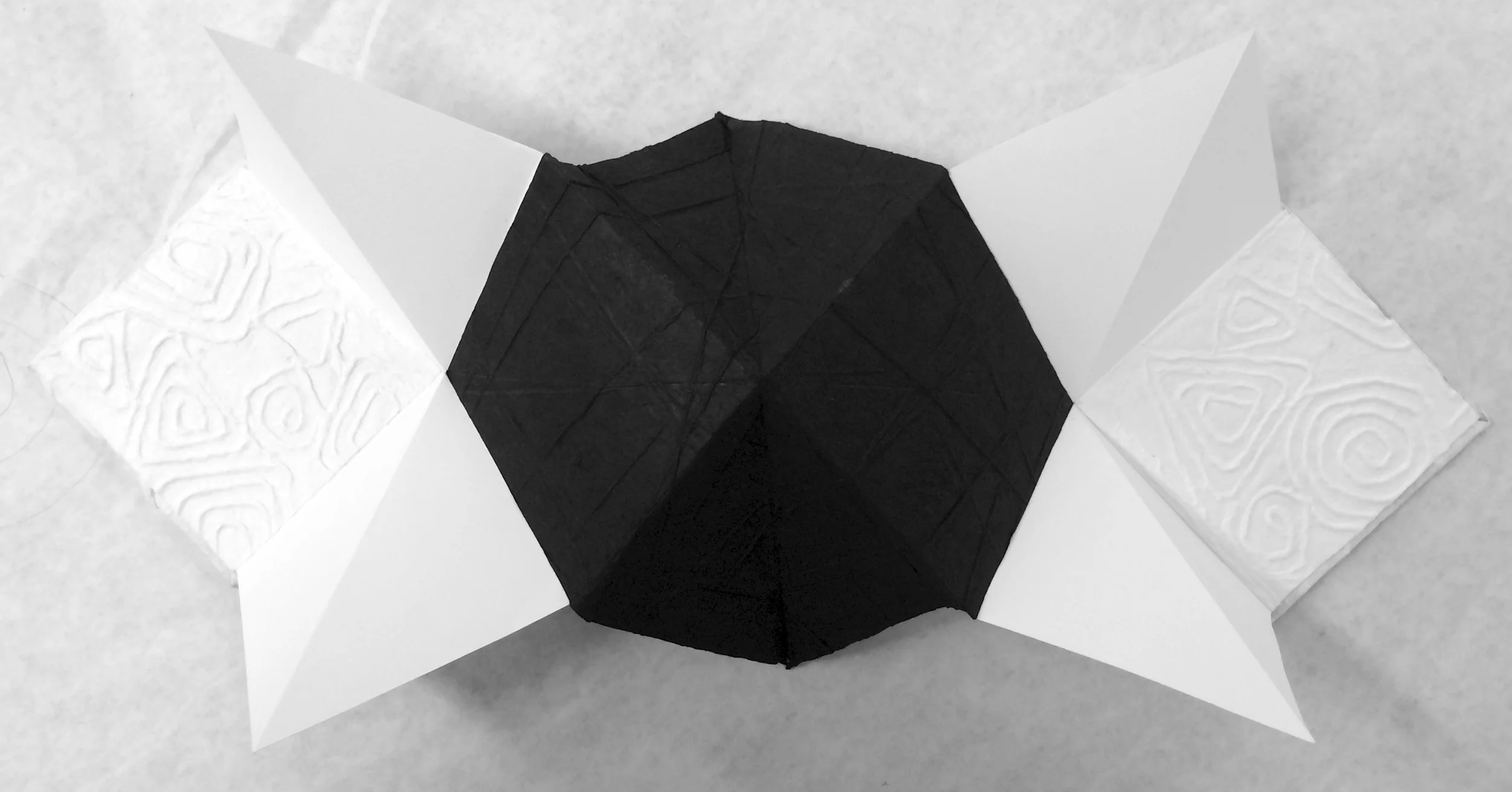
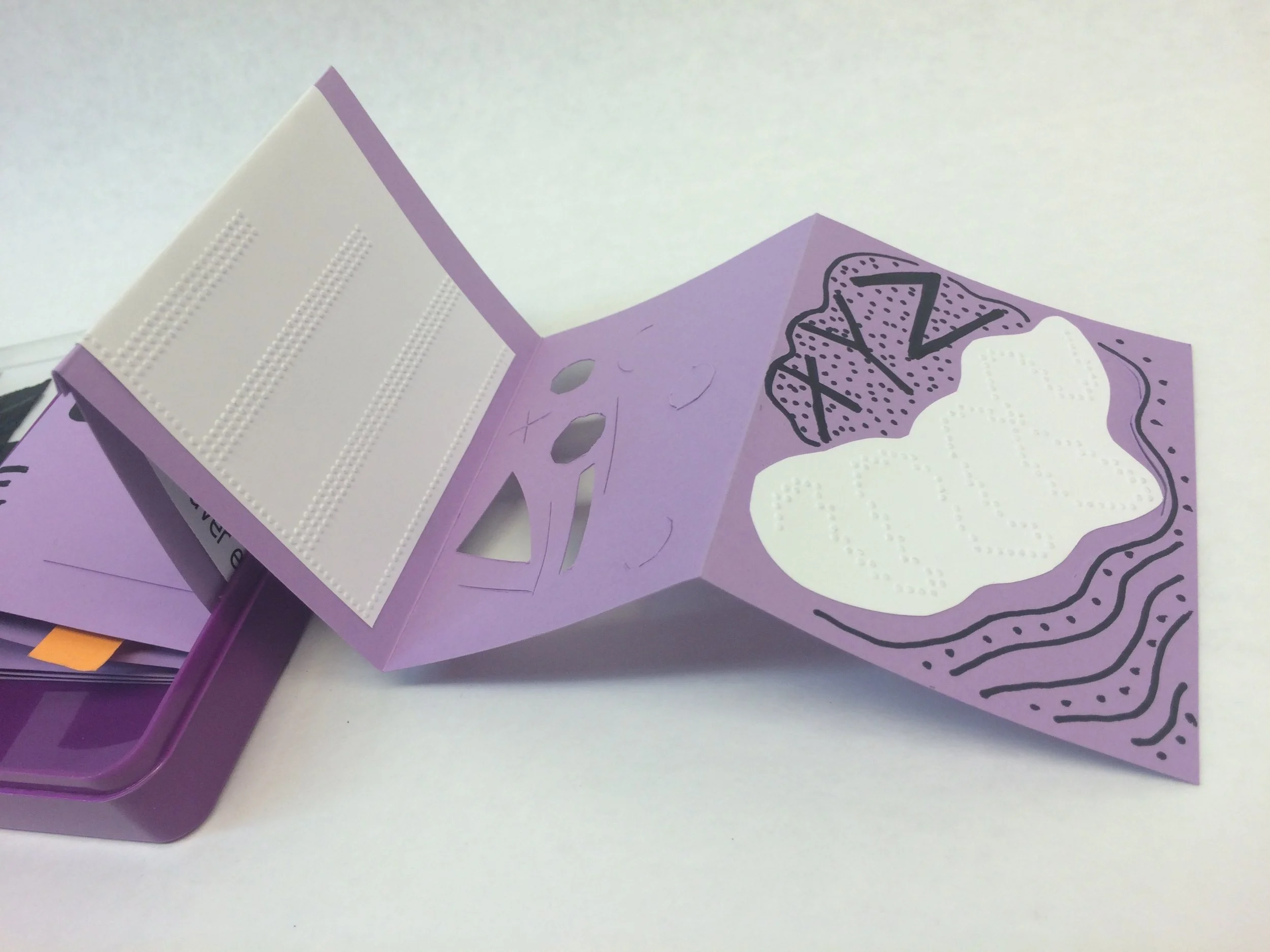


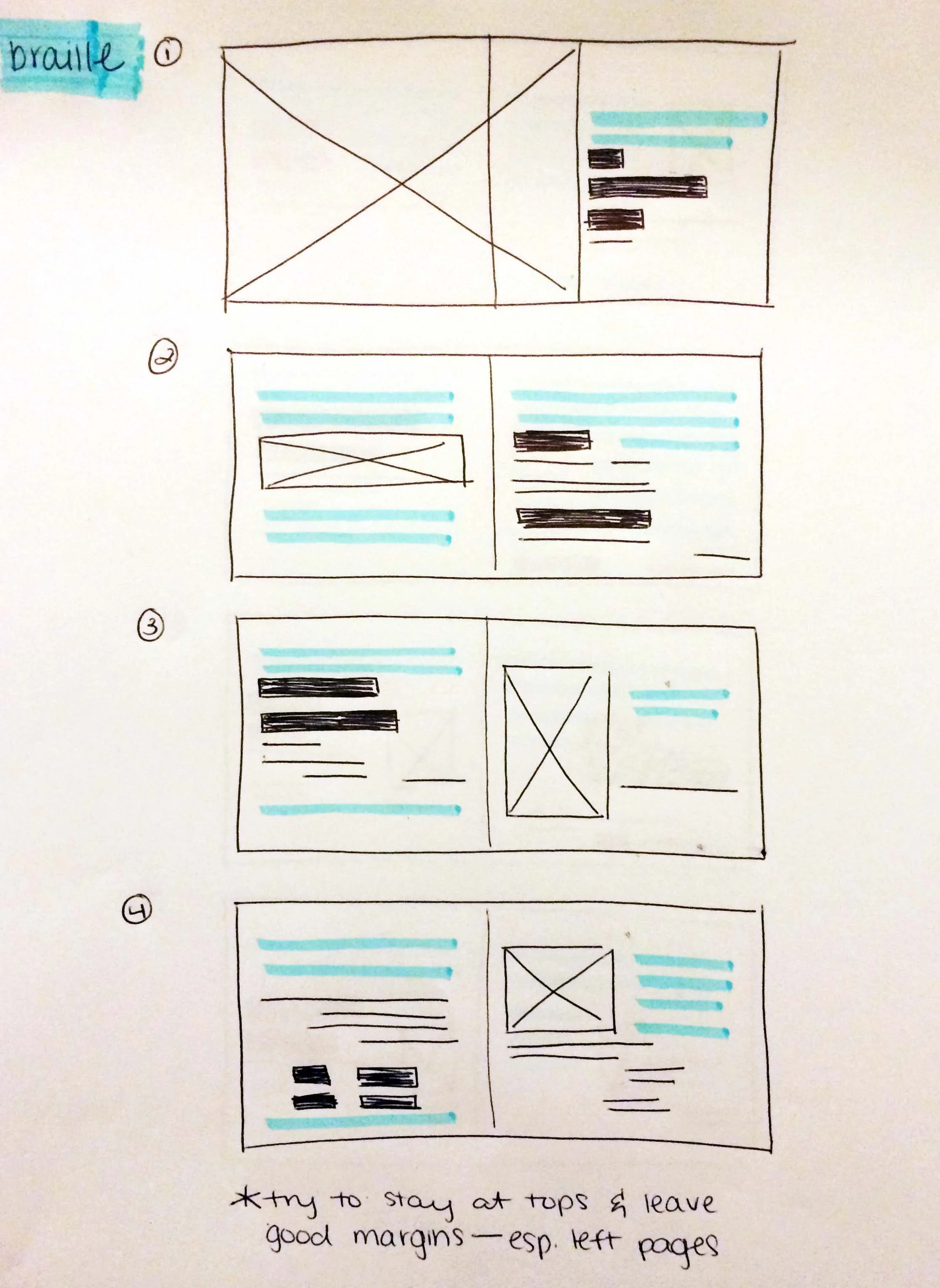
Thumbnail sketches for my book that work out where the braille will be (blue highlighter) in relation to my printed text and visual design
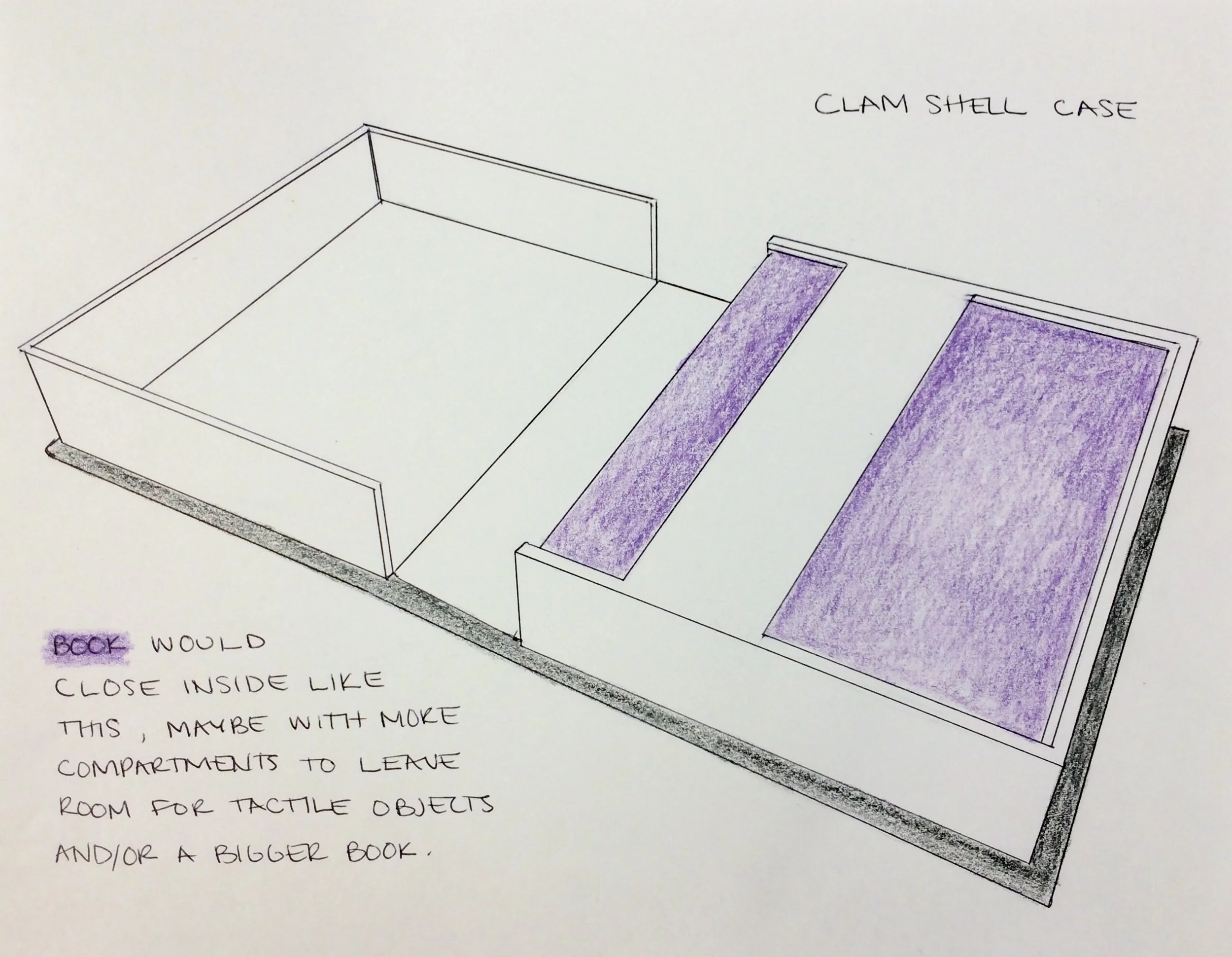
Concepts for the project’s final form

Half way through the project I started writing a journal of my reflections on what I was learning by working with India. I printed them out and played with designing them and they ultimately became part of the final product
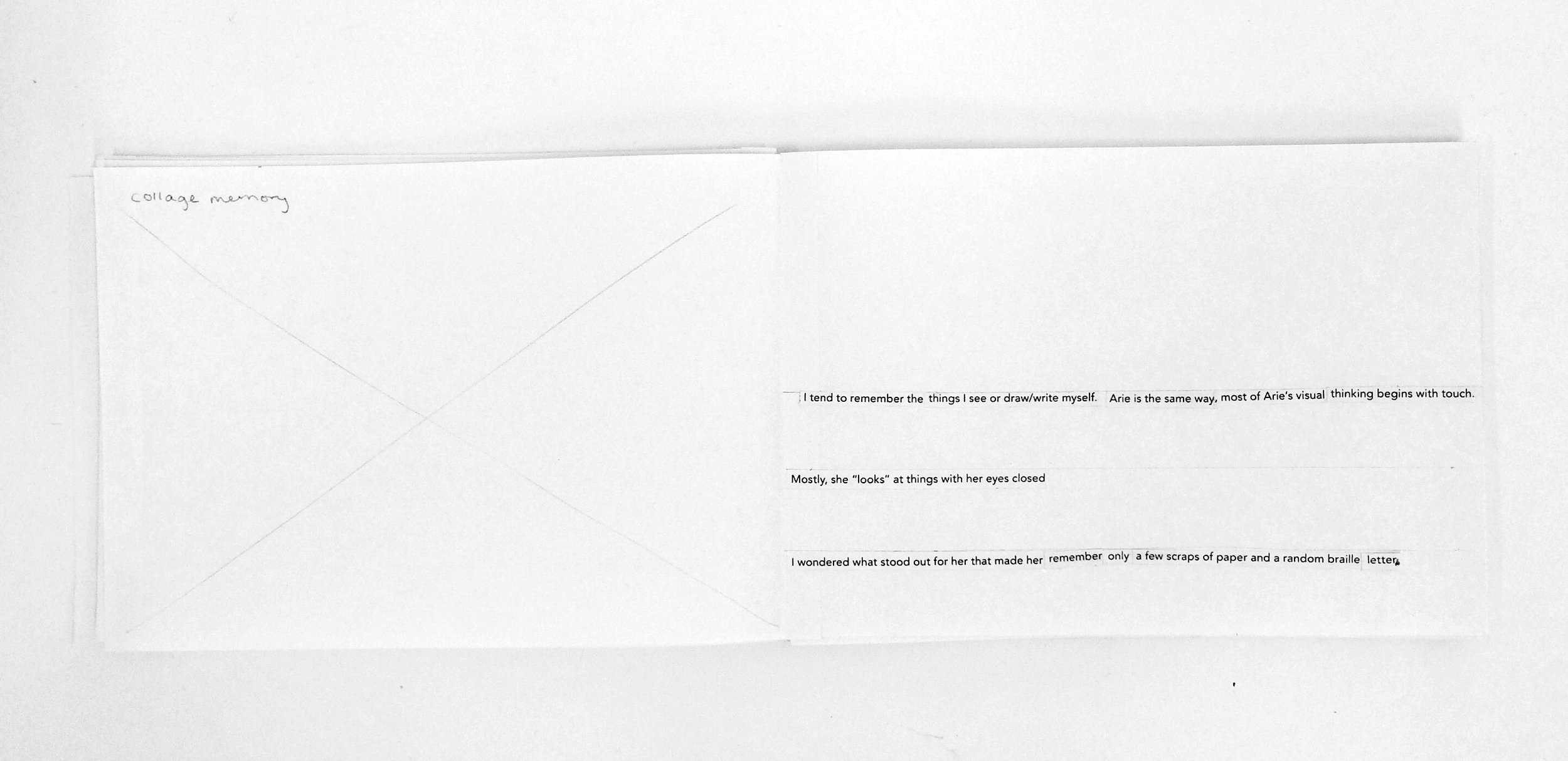
An early paper prototype of my book where I figured out the layout of the text and imagery

An early prototype of a clamshell box and book to practice book making and test the proportions of the product
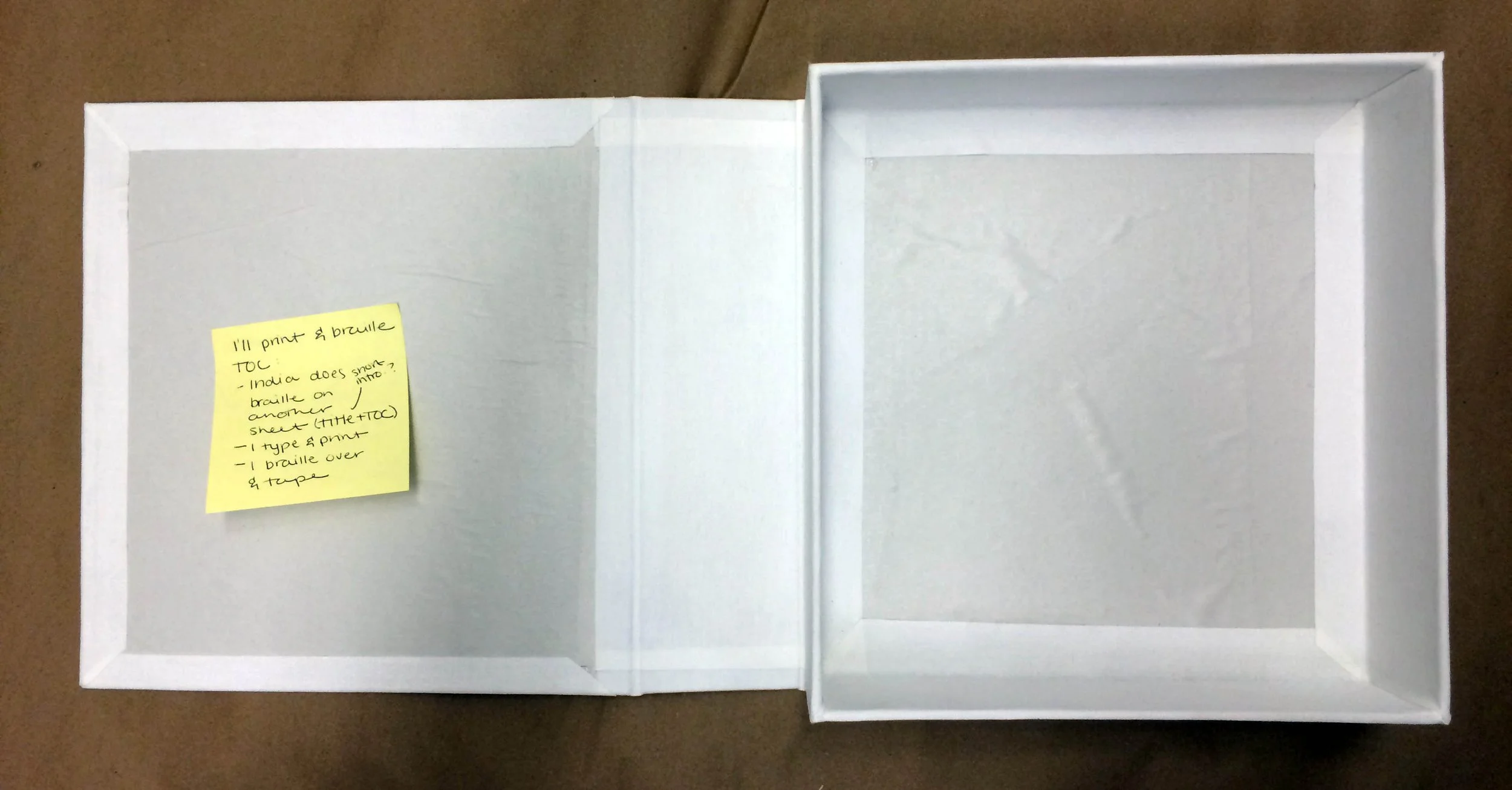
My construction in progress of the box that would hold four of India’s books

Design Solutions
I collaborated with my student partner to help each other see differently.
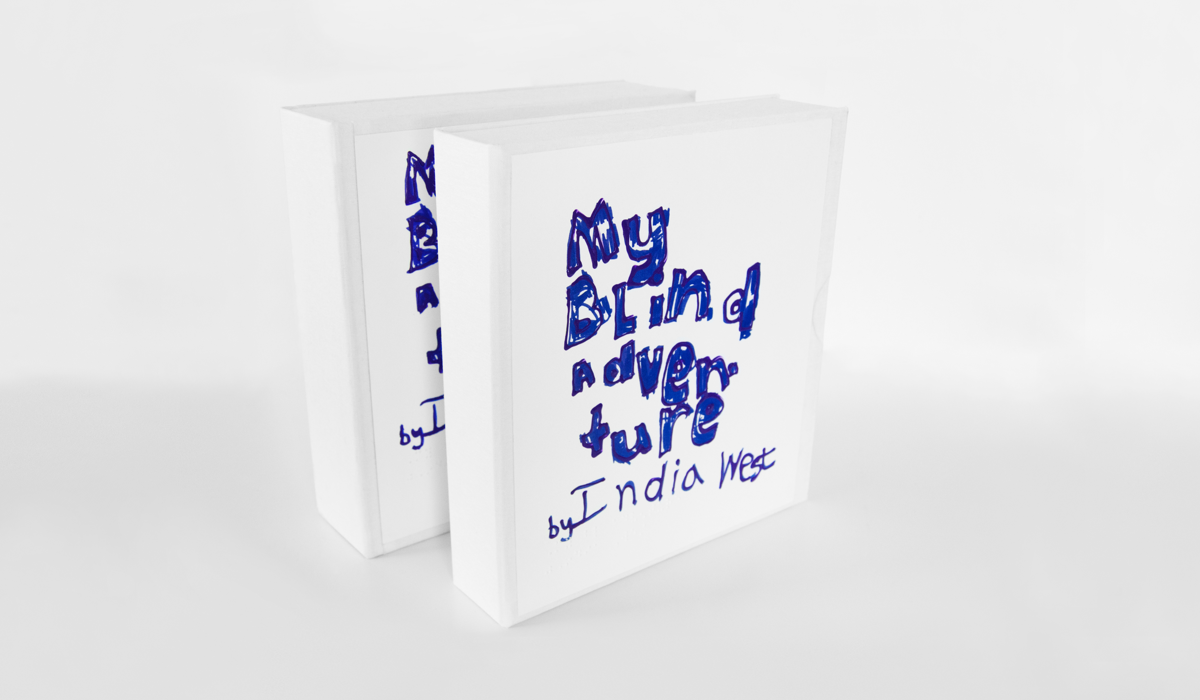
My student partner India and I created two books together, in standard type and braille: the first, My Blind Adventure, is a four-part autobiography that tells the story of this inspiring student, the second, see clearly from a distance, colors, is a collection of valuable perspectives I gained through this collaboration.
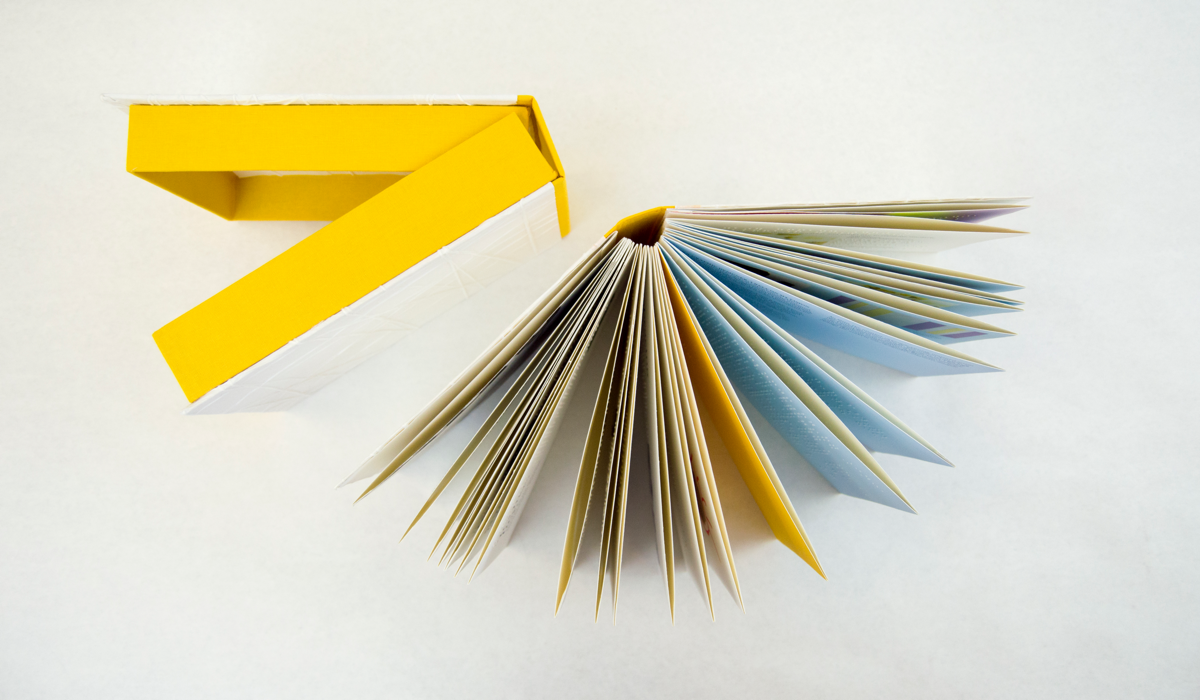
Design Solutions
Book of My Experiences
A reflective artifact documenting my design journey and learnings from collaborating with India.
Written, designed, printed, and bound by me
Content presented in both print and Braille
Braille was set around printed text using a Brailler
Concertina fold, housed in a clamshell box, emphasizing process and continuity
Book of India’s Experiences
A tactile, illustrative storytelling experience sharing India’s life events in her own voice.
Written and illustrated by India, in both print and Braille
Designed, printed, and bound by me
Four separate books, each with distinct textures and sizes to create a layered sensory narrative
Drum-leaf binding, housed in a flip-top drop-spine box, reinforcing structure and progression
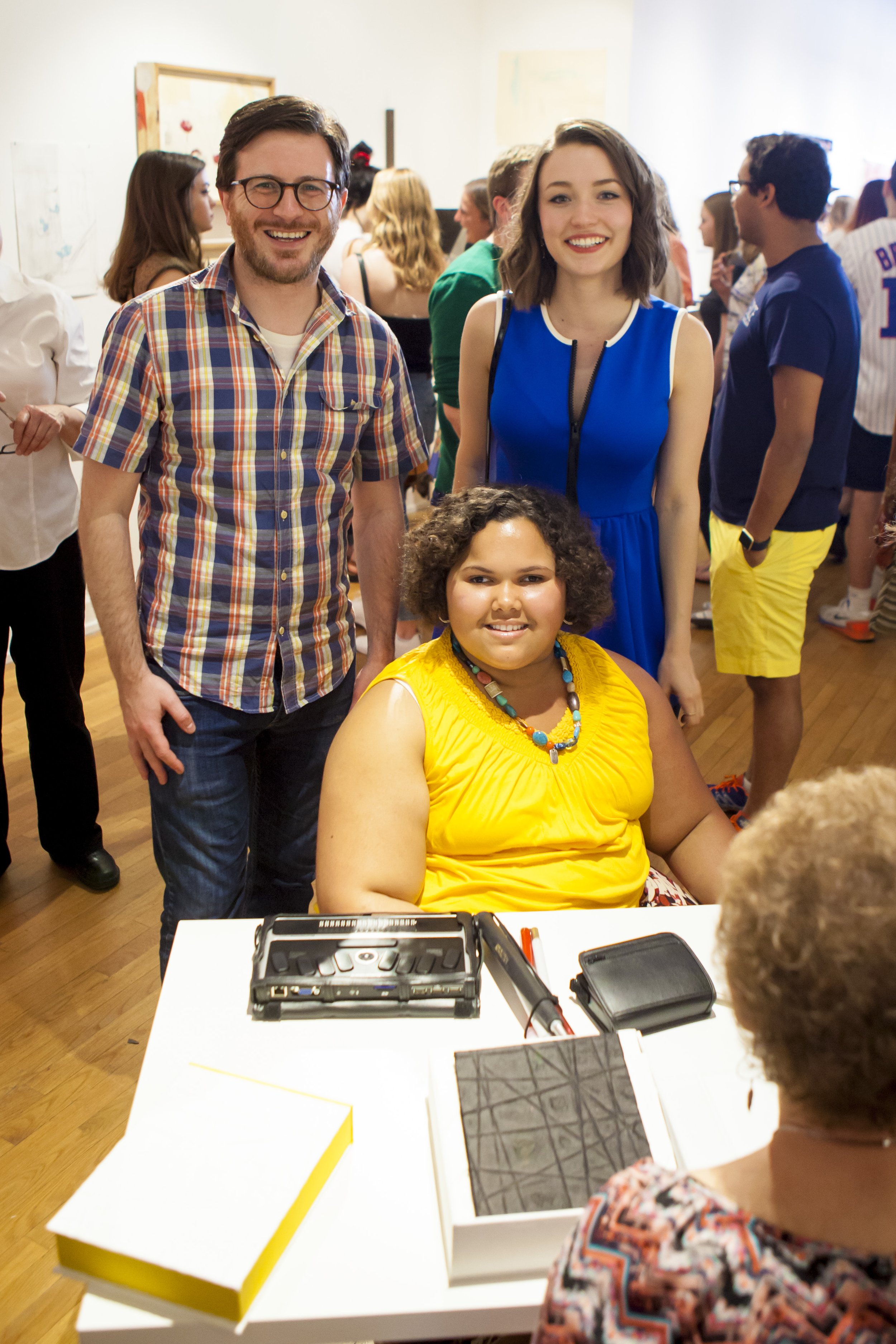
India and I presenting our books at the gallery opening


Outcomes & Impact
✓ Created accessible, multi-sensory storytelling experiences rooted in collaboration
✓ Strengthened inclusive design practices applicable beyond print
✓ Received a Certificate of Appreciation from the University of Michigan Council for Disability Concerns
✓ Project archived in the University of Michigan Special Collections Library and you can read about the project here
What I Learned
Empathy and collaboration are foundational to effective user-centered design
Accessibility is not a constraint, it’s a design driver
Long-term collaboration leads to deeper understanding and better outcomes
The same UX principles apply across mediums, from digital products to print
Next Steps
Continue collaborating with people of varying abilities to inform inclusive design practices
Push beyond familiar design methods to explore new ways of communicating experience
While this project lives outside traditional digital UX, it shaped how I approach accessibility, collaboration, and empathy in all of my product design work.